Shane Larson
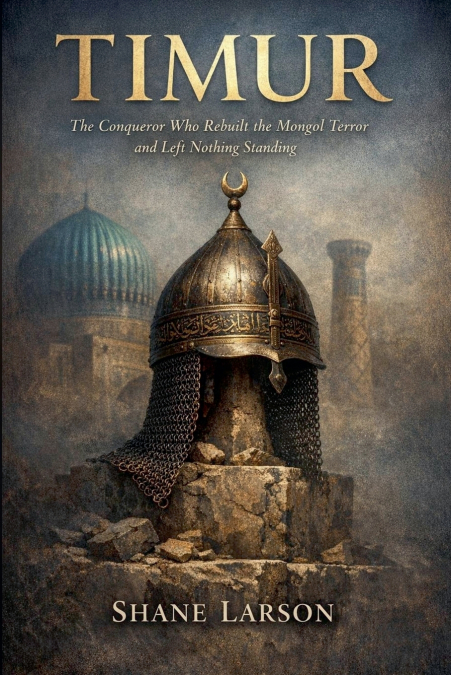
He captured the sultan who was strangling Constantinople - and bought the city another fifty years. Most readers cannot place his name.In July 1402, outside Ankara, the most feared army in Europe was destroyed in a single day by an army from Samarkand. The Ottoman sultan Bayezid - conqueror of the last great crusade, besieger of Constantinople - ended the day a prisoner. His empire fell into a decade of civil war. The city his armies had been starving got another half-century. The man responsible was sixty-six years old, walked with a limp from wounds taken as a young raider, and had spent thirty years conquering everything from Delhi to Damascus. Europe called him Tamerlane. He is the most destructive individual of a century that included the Black Death, and he is remembered less than a tenth as well as Genghis Khan.This book tells his whole story - and the contradiction at the center of it. Timur built towers from the heads of cities that resisted him, as deliberate policy, advertised in advance. He also emptied every conquered capital of its masons, tilemakers, and glassworkers and sent them to Samarkand, where they built one of the most beautiful cities on earth: turquoise domes, monumental madrasas, gardens named for the capitals he had ruined. The massacres and the architecture were not a paradox. They were the same policy, executed at opposite ends of the same roads.Along the way: the puppet khans he ruled through because he could never legally be one, the winter campaigns that broke the Golden Horde and cleared the ground for Moscow’s rise, the sack of Delhi, the second death of Baghdad - and the astonishing weeks outside Damascus when Ibn Khaldun, the greatest historian of the age, was lowered over the city wall by rope to negotiate with him, and stayed to talk.What you’ll learn:How a minor tribal chief with no royal blood built legitimacy he was never entitled toWhy the towers of skulls were a communication system - and what they were meant to sayHow one battle in Anatolia reset the Ottoman Empire and reprieved Constantinople until 1453Why the empire collapsed within months of his death on the road to invade Ming ChinaHow his grandson’s observatory and his descendant’s Mughal Empire outlasted everything he conqueredWhat Samarkand’s surviving monuments actually are, and who was forced to build themThis book is for you if:You want the sequel to the Mongol story - what the steppe did for an encoreYou read narrative history that weighs its sources instead of just retelling themYou wondered why Constantinople fell in 1453 and not fifty years earlierYou want conquest history told plainly - neither sanitized nor sensationalizedThe last great steppe conqueror, the empire that died with him, and the city that didn’t. Start reading.