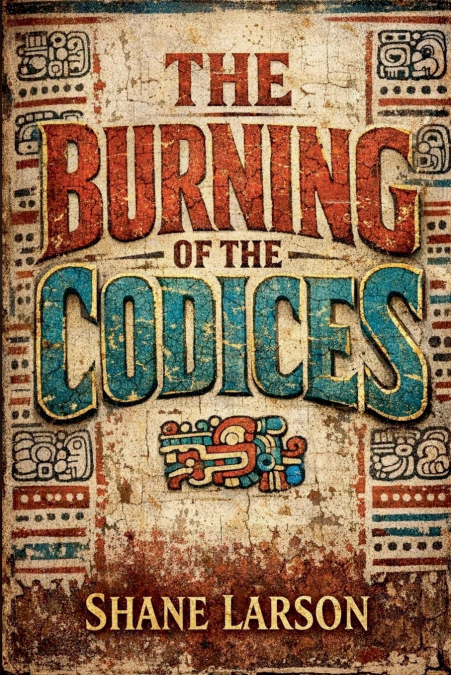
Shane Larson
Four Maya books survive. He burned the rest-and then wrote the key that let us read them.The Maya wrote books. Real books: bark paper coated in white gesso, folded into screenfolds between wooden or jaguar-skin covers, painted in red, black, and Maya blue in a full writing system that recorded astronomy, prophecy, medicine, genealogy, and history. This was a civilisation with a paper industry, professional scribes, and books in the households of its priests and lords. Most readers have no idea-and that gap in common knowledge is itself the measure of how completely the erasure worked.In July 1562, in the Yucatán town of Maní, a Franciscan friar named Diego de Landa held an auto de fe. At the end of proceedings against Maya converts he believed were still practicing the old religion, the idols went into the fire-and so did the books. The great losses of written knowledge are usually legends: Alexandria has no arsonist, Baghdad has a myth. Maní has a date, a place, a named man, an inquiry file, and a written statement from the perpetrator himself, who recorded that the Maya regretted the burning 'to an amazing degree.'Then the story turns. Recalled to Spain to answer for the affair, Landa defended himself by writing the most detailed account of Maya life, religion, and calendar in existence-the Relación-and in it he recorded a garbled 'alphabet' dictated by an informant who was actually giving him syllables. Three centuries later, a linguist in Moscow read that list correctly and cracked the script. The man who burned the library also wrote the key to it.What you’ll learn:How Maya codices were made, who wrote them, and what a literate Mesoamerican civilisation kept in its booksWhat happened at Maní in July 1562, drawn from the colonial inquiry documents-and what Landa is and is not responsible forWhy only four codices survive-Dresden, Madrid, Paris, and the long-disputed Grolier-and how each reached the modern worldHow the Dresden Codex tracks Venus and predicts eclipses-and how close 1945 came to making four books threeWhy Landa’s 'alphabet' was nonsense as an alphabet and gold as a syllabaryHow Knorozov and Proskouriakoff overturned decades of expert consensus and pulled real kings, wars, and dynasties out of the stonesWhy six million people speak Mayan languages today-and how Maya epigraphers now read their ancestors’ inscriptionsThis book is for you if:You’re drawn to lost libraries, destroyed knowledge, and the question of what survivesYou love a decipherment story-a dead script slowly forced to speak againYou want conquest-era history told from the evidence, without apologia or polemicYou’ve wondered what the Maya actually wrote, beyond the calendar mythsYou prefer history that gives you the honest number instead of the dramatic oneA library burned in an afternoon. A language survived five centuries. This is the story of both-and of the strange, flawed document that let a civilisation’s voice be heard again.