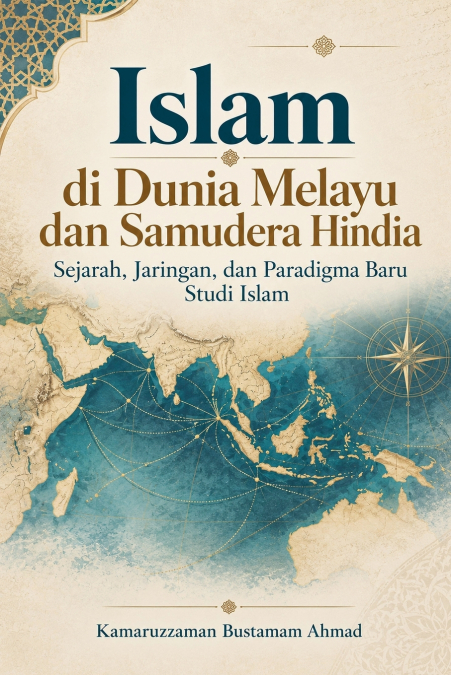
Kamaruzzaman Bustamam Ahmad
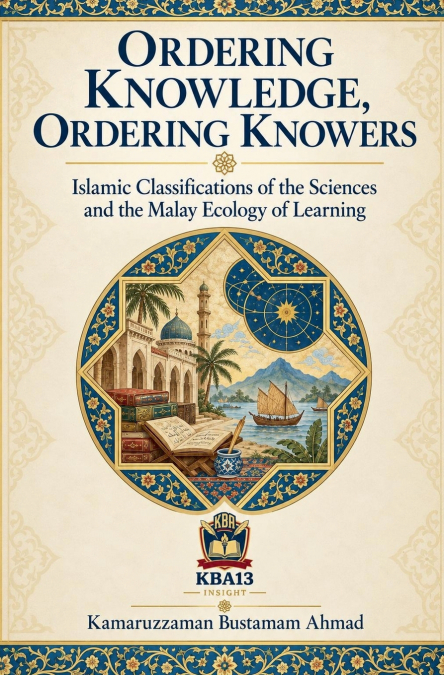
Who decides what counts as knowledge-and who has the authority to decide who truly knows? For more than a millennium, Muslim thinkers did more than classify the sciences. They constructed architectures of knowledge linking truth, method, ethics, spiritual formation, education, authority, and the purposes for which knowledge should be pursued. Ordering Knowledge, Ordering Knowers: Islamic Classifications of the Sciences and the Malay Ecology of Learning reconstructs this intellectual architecture and follows its transformation from the classical Islamic world into the educational cultures of the Malay-Indonesian archipelago. Beginning with the contrasting systems of al-Fārābī and al-Ghazālī, Kamaruzzaman Bustamam Ahmad examines how Muslim scholars ranked forms of knowledge, distinguished demonstration from revelation and spiritual unveiling, and connected the pursuit of learning with the formation of the knower. The book also critically engages Osman Bakar’s influential reconstruction of the Islamic classification of the sciences, asking whether these classical systems can truly be understood as expressions of a single philosophy of knowledge. The argument then moves into Southeast Asia. Through Jawi scholarship, sanad, adab, dayah, pesantren, surau, and halaqah, the book shows that the Malay world did not simply inherit Islamic epistemology. It translated, reorganised, and institutionalised it into a distinctive ecology of learning. The final chapters examine colonial education, the modern Islamic university, Islamisation and integration projects, and the transformation of religious authority in the digital age. Search engines, algorithms, metrics, and generative artificial intelligence appear here not as an entirely new epistemic world, but as the latest stage in an older struggle over who-and what-may be trusted as a source of knowledge. Bringing together Islamic intellectual history, epistemology, anthropology, education, and Southeast Asian studies, Ordering Knowledge, Ordering Knowers offers a sustained account of how systems of knowledge become systems for ordering people, institutions, and authority. It asks a question that has become increasingly urgent in the digital age: When knowledge is reordered, what happens to the people recognised as knowers?