Ashcroft J. Penrose
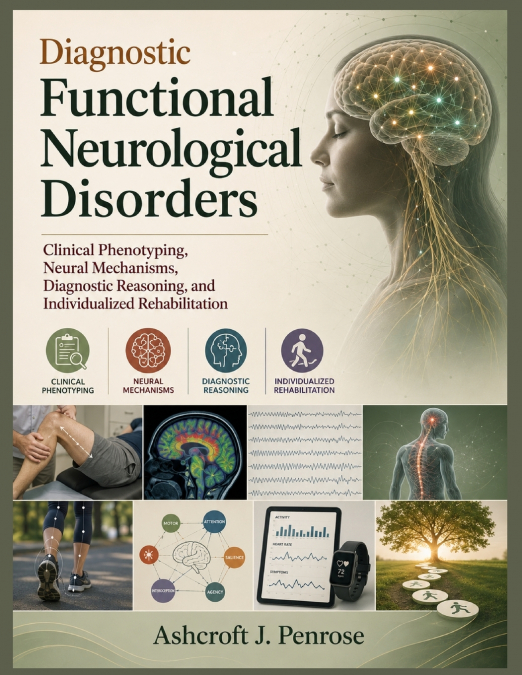
Functional neurological disorders present a distinctive challenge at the intersection of clinical neurology, movement disorders, epileptology, neuropsychiatry, neuroscience, and rehabilitation. Patients may develop genuine and disabling neurological symptoms-including weakness, sensory disturbance, tremor, dystonia, gait abnormalities, functional seizures, cognitive symptoms, and speech or voice disturbances-without the conventional structural lesion expected to account for them.This advanced clinical reference presents a contemporary framework for recognizing and managing these disorders through positive neurological diagnosis rather than diagnosis by exclusion. It examines the clinical features that establish functional symptoms, the neurological examination techniques that demonstrate preserved or internally inconsistent function, and the investigations required when functional symptoms coexist with or resemble organic neurological disease.The book explores the emerging neuroscience of functional symptoms, including altered motor and sensory processing, attention, salience, interoception, agency, predictive processing, and distributed brain-network function. Detailed consideration is given to functional weakness, sensory symptoms, functional movement disorders, gait and balance disorders, speech and voice manifestations, functional seizures, functional cognitive symptoms, dissociative presentations, and complex multisystem phenotypes.Particular emphasis is placed on diagnostic reasoning and avoiding common clinical errors. The discussion addresses important mimics and comorbid conditions, including epilepsy, stroke, movement disorders, migraine, neuropathy, spinal disease, neurodegenerative disorders, pain disorders, and psychiatric conditions. The text also examines the challenging circumstances in which functional symptoms occur alongside established neurological disease.Management is approached as an individualized neurological rehabilitation process rather than a single therapeutic intervention. Diagnostic communication, physiotherapy, motor retraining, occupational and speech therapy, psychological interventions, management of comorbidities, functional seizure treatment, multidisciplinary care, outcome measurement, and long-term recovery are integrated into a coherent clinical framework.The final section examines the rapidly developing field of precision functional neurology, including phenotype-based classification, neuroimaging and neurophysiological biomarkers, computational models, digital phenotyping, wearable monitoring, artificial intelligence, neuromodulation, personalized rehabilitation, and mechanism-informed clinical trials.