Ashcroft J. Penrose
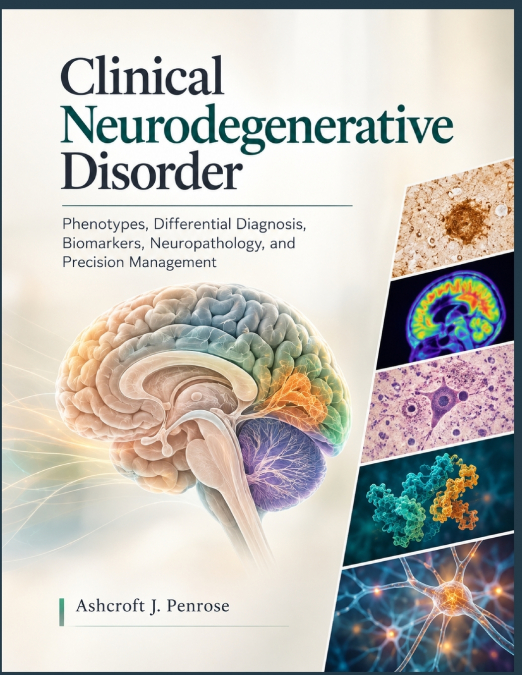
Neurodegenerative disease represents one of the most challenging areas of contemporary clinical neuroscience, where complex molecular pathology, selective neuronal vulnerability, progressive network dysfunction, and heterogeneous clinical phenotypes converge. Accurate diagnosis increasingly requires integration of clinical examination with neuroimaging, fluid and molecular biomarkers, genetics, and neuropathologic evidence.This advanced reference provides an integrated approach to the recognition, investigation, classification, and management of progressive neurodegenerative syndromes. Rather than treating individual disorders as isolated entities, it connects their clinical manifestations with the cellular, molecular, anatomical, and pathological processes that drive neuronal dysfunction and loss.The book examines the major proteinopathies and genetic mechanisms underlying neurodegeneration, including amyloid-β and tau pathology, α-synucleinopathies, TDP-43 and FUS-associated disease, polyglutamine disorders, repeat-expansion syndromes, mitochondrial and metabolic mechanisms, and other molecular pathways. Detailed consideration is given to Alzheimer disease, Lewy body disorders, multiple system atrophy, frontotemporal lobar degeneration, progressive supranuclear palsy, corticobasal degeneration, amyotrophic lateral sclerosis, Huntington disease, hereditary ataxias, and neurodegeneration with brain iron accumulation.Particular emphasis is placed on differential diagnosis and modern molecular classification. Clinical phenotypes are examined alongside regional neuroanatomy, MRI and molecular imaging patterns, genetic findings, fluid biomarkers, and tissue-based pathology. Neuropathologic examination, immunohistochemistry, molecular diagnostics, mixed proteinopathies, and clinicopathologic correlation are addressed in a manner relevant to both clinical and laboratory practice.The book also explores the rapidly evolving therapeutic landscape, including anti-amyloid strategies, tau-directed therapies, α-synuclein-targeted approaches, antisense oligonucleotides, RNA therapeutics, gene replacement, gene editing, neuroprotection, immunomodulation, and biomarker-guided clinical trials. Emerging concepts in preclinical intervention and precision neurology illustrate how treatment is increasingly shifting from symptomatic control toward mechanism-based disease modification.