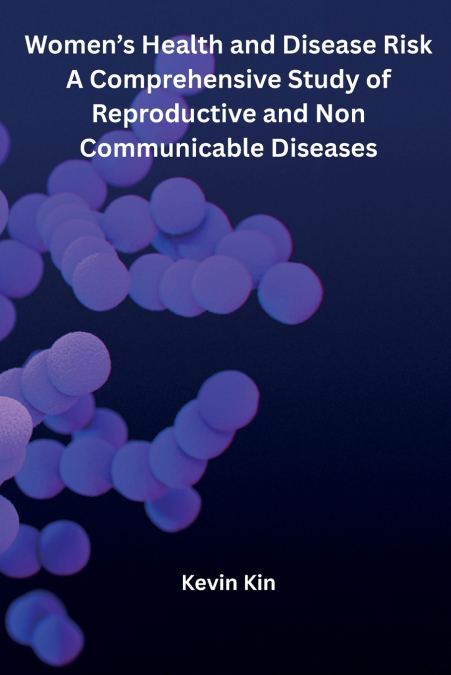
Kevin Kin
Women’s Health and Disease Risk: A Comprehensive Study of Reproductive and Non Communicable Diseases examines major health conditions affecting women across reproductive and broader noncommunicable disease contexts. The book brings together concepts related to women’s health, reproductive health, disease risk, chronic disease, preventive healthcare, and population health. It considers the relationship between reproductive conditions and noncommunicable diseases, providing a broad framework for understanding how different categories of disease can influence women’s health and wellbeing. Relevant topics include reproductive disorders, chronic diseases, risk factors, disease prevention, health assessment, screening, epidemiology, public health, and women-centered healthcare. The multidisciplinary perspective connects clinical and public health concepts while emphasizing the importance of identifying risk factors and understanding patterns of disease among women. The book is intended for readers seeking a structured introduction to health risks associated with reproductive and noncommunicable diseases, including students, researchers, healthcare professionals, public health practitioners, and readers in health sciences. It can also support academic discussion of preventive strategies, disease burden, health promotion, and risk assessment in women’s healthcare. By addressing reproductive and chronic disease considerations together, the book highlights the breadth of factors that contribute to women’s health outcomes. Its terminology and subject coverage are relevant to nursing, medicine, public health, epidemiology, reproductive health, and healthcare research. The material provides a general foundation for examining disease risk and prevention without limiting the discussion to a single medical condition, age group, or clinical specialty. It is therefore suited to multidisciplinary readers interested in understanding women’s health through the combined perspectives of reproductive disease and noncommunicable disease risk.