Shane Larson
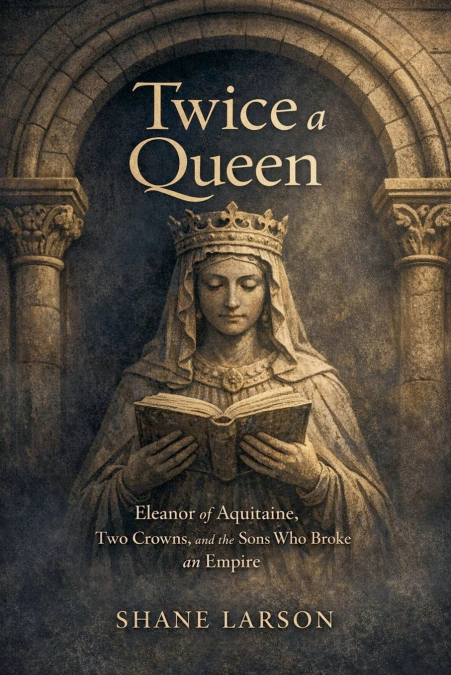
She was queen of France for fifteen years and queen of England for fifty, and not one sentence survives that we can be sure she wrote.At about thirteen Eleanor of Aquitaine inherited a duchy larger than the lands the king of France governed. Within four months she was married to his son; within weeks she was queen. She went on crusade, quarrelled with her husband in public at Antioch, and came home to a pope who tried to mend the marriage by putting them into one bed. The marriage was dissolved in 1152; eight weeks later she married Henry Plantagenet, about a decade younger, who was king of England two years later. She bore ten children; two became kings. She governed England in Henry’s absence, rose against him with their sons, spent the better part of sixteen years as his prisoner, and outlived him by fifteen.Every famous scene in that life was written down by a man who never met her, often decades later. On a few guarded lines about a political quarrel, chroniclers built an affair with her uncle, then with Saladin, then a boy of about ten. On a literary treatise from her daughter’s court, later writers built the courts of love, and nobody has found a trace of them since. The she-wolf who turned her sons against their father was a prisoner for the whole of their later wars. The real record is drier and stranger: a hundred and fifty charters, regency writs, and the exchequer rolls that priced her wine while she was in custody.This book tells the life as narrative and names the witness in every scene: who reported it, when he wrote, whether he could have known, and which way he leaned. Its weight falls on the years nobody tells, 1189 to 1204, when she rode through England freeing prisoners, held the kingdom against her youngest son, raised the 150,000-mark ransom that bought Richard back from the emperor, crossed the Pyrenees at about seventy-six to choose a bride for the French heir, and at about eighty sat besieged at Mirebeau and sent for help. The documents are thickest there, and so is she.What you’ll learn:Why Aquitaine, not beauty, made a girl of thirteen worth marrying twice, and why neither husband was allowed to forget whose it wasWhat happened at Antioch in 1148 according to the one witness who was nearly there, and how the rumour grew for five centuriesWhy a book written in Champagne in the 1180s is not a record of anything that happened at PoitiersWhat the evidence for her part in the 1173 revolt really is: one contemporary letter and a handful of hedged chronicle linesHow a queen mother with no formal office raised a ransom of 150,000 marks, and whose Latin is in the angry letters to the pope in her nameWhat her tomb effigy, the only royal one of its age shown reading, can and cannot tell usThis book is for you if:You have met Eleanor in novels, on screen, or in a footnote to Henry II, and want to know how much is realYou read about women who held power through inheritance, marriage, and motherhood, and used all three wellYou know the Conquest and Magna Carta and want the Angevin century between themYou want the sources named, the rumours traced, and the verdict left to youSixteen years her husband’s prisoner. Fifteen years his survivor. The most formidable years of her life began at about sixty-five.