Shane Larson
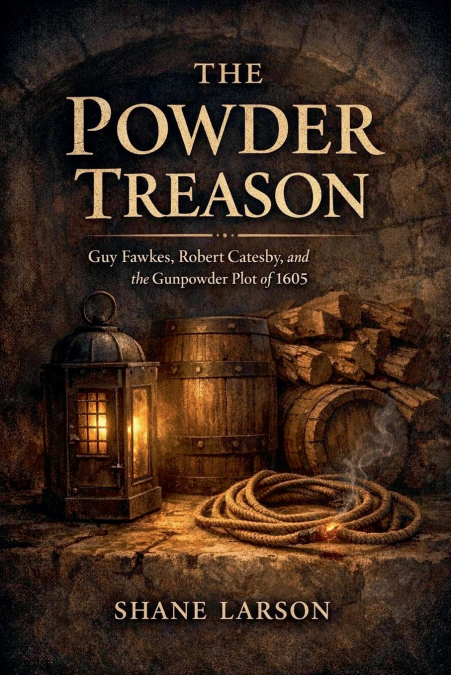
Guy Fawkes did not lead the Gunpowder Plot. He did not plan it and recruited nobody. He was hired abroad, for what he knew about powder, by Robert Catesby, the man who conceived the plot, found the money, chose the day, and died four days after the cellar door opened, untried and unconfessed. Four centuries on, the hired man is the effigy, and there is no word in the language derived from Catesby.The popular story descends from the government that foiled the plot. It was printed within weeks and read aloud in every parish church, by Act of Parliament, from 1606 to 1859. This book begins where the plotters began instead: in the Catholic England of their fathers, where hearing Mass cost a hundred marks and a year in prison, where a recusant paid £20 a month or forfeited two-thirds of his land, where a priest ordained abroad was a traitor by statute, and where the pursuivants came at night. The thirteen men who swore the oath at the Duck and Drake in May 1604 were nearly all kin, nearly all from that Midland gentry world, and they turned to powder when a new king they had been led to hope in reimposed the fines within a year.Then the plot itself, told from the confessions, Cecil’s letters and the printed record, each source weighed by how it was obtained: the undercroft leased beneath the Lords; the barrels brought across from Lambeth; the unsigned letter delivered to Lord Monteagle at Hoxton on 26 October 1605, whose writer has never been identified; Knyvet’s midnight search; the king’s written permission for torture; the ride to Holbeche House; the trial in Westminster Hall; the Jesuit superior Henry Garnet, hanged over what he had known of the plot and under what seal he had learned it; and the carpenter Nicholas Owen, who built the priest-holes and died in the Tower without naming one.The plot was an attempt at mass killing for a religious cause, and the book says so. The persecution before it is documented at the same length. Neither excuses the other, and the narration speaks in neither the government’s voice nor the martyrologists’. Where the evidence is open, it stays open: the mine never found, the 'decayed' powder, how early Cecil knew, and the case that the government staged it all, given a full hearing and declined.What you’ll learn:Why Catesby led and Fawkes was hired, and how one week with one prisoner fixed the storyWhat the laws of 1581 and 1585 cost a Catholic family, with the fines in figuresWho has been accused of writing the Monteagle letter, and why no case closesWhat the confessions say, how they were obtained, and how they were edited for printWhy Garnet and Owen died, and what the record shows each of them knewHow a statutory day of thanksgiving became a bonfire, and what it cost English Catholics for two centuriesThis book is for you if:You know the rhyme and the fifth of November and have never been told the eventYou read Tudor and Stuart history and want the hinge between themYou want the persecution and the plot in one book, with neither excusing the otherYou have read Elizabeth I, Mary, Queen of Scots or The Enterprise of England and want what came nextThe story was written by the men who foiled the plot. This is the one the documents tell.