Inicio > Matemáticas y ciencia > Biologia, ciencias de la vida > Ciencias de la vida: cuestiones generales > Evolución > THE UNICITY OF MANKIND - What the Evidence Says About Where We Came From
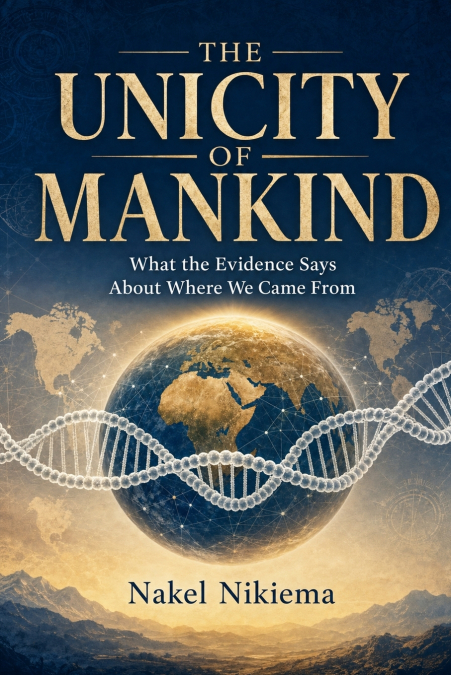
THE UNICITY OF MANKIND - What the Evidence Says About Where We Came From

THE UNICITY OF MANKIND - What the Evidence Says About Where We Came From

Nakel Nikiema

20,29 €
IVA incluido
Disponible
Editorial:
Self Publishing
Año de edición:
2026
Materia
Evolución
ISBN:
9781968370602
20,29 €
IVA incluido
Disponible
Añadir a favoritos

The Unicity of Mankind: What the Evidence Says About Where We Came From is an evidence-driven examination of one of humanity’s oldest and most consequential questions: Are the divisions we call race rooted deeply in human biology-or did history build categories that genetics does not support?Drawing on archaeology, population genetics, ancient DNA, anthropology, and the history of racial classification, Nakel Nikiema follows the evidence from the earliest known Homo sapiens fossils in Africa to the genomes of people living today. The book examines discoveries at Jebel Irhoud, Omo Kibish, Herto, and other major sites; the movement of human populations out of Africa; Neanderthal and Denisovan admixture; the evolution of skin pigmentation; and what modern genetics actually reveals about human variation. Rather than presenting human origins as a simple story emerging from a single point, the evidence increasingly describes interconnected African populations that separated, reconnected, and exchanged genes over immense spans of time. Unicity-of-Mankind-PRINT-6x9Along the way, the book confronts some of the most persistent assumptions about race. If humans can be visually different, why do genetic studies show such shallow differentiation? Why can ancestry sometimes be estimated from skeletal remains without proving that biological races exist? What does ancient DNA really tell us about the skin color of early Europeans? And do Neanderthal and Denisovan ancestry challenge the common African origin of modern humanity?Nikiema does not avoid evidence that complicates the argument. The book examines competing interpretations, disputed fossil classifications, changing archaeological dates, the limitations of ancestry models, and cases in which scientific claims were overstated in popular reporting. Its approach is deliberately cautious: where evidence is strong, it is presented as strong; where uncertainty remains, the uncertainty remains visible. The manuscript explicitly distinguishes scientific evidence from the moral question of human equality, arguing that equality should not depend on any genetic percentage or measurement. Unicity-of-Mankind-PRINT-6x9The book also traces how racial categories became embedded in science and society-from eighteenth- and nineteenth-century classification systems to craniometry, scientific racism, eugenics, forensic anthropology, and modern race-based medical practices. What emerges is not a story in which human differences disappear, but one in which those differences are recent, overlapping, adaptive, and far more complex than traditional racial categories suggest. The book’s discussion of pigmentation, for example, shows that visible traits can evolve repeatedly under local environmental pressures and can therefore be poor measures of deep ancestry. Unicity-of-Mankind-PRINT-6x9At its center is a simple but carefully defended proposition: humanity’s diversity is real, but it exists within one deeply interconnected human lineage. There is no genetically 'pure' population, no independent racial trunk of humanity, and no scientific measurement that can convert ancestry into a hierarchy of human worth. Even archaic admixture with Neanderthals and Denisovans fits within a larger history of related populations exchanging genes rather than evolving as separate human origins. Unicity-of-Mankind-PRINT-6x9Accessible to general readers while grounded in serious scholarship, The Unicity of Mankind is for readers interested in human evolution, genetics, anthropology, African history, race, identity, and the relationship between science and society.We did not become one humanity.The evidence suggests we always were.
Artículos relacionados

  • From Logos to Bios
    Wynand de Beer
    ...
  • L’età dell’oro dei cacciatori
    Alberto Peruffo
    L'universo, il pianeta Terra, l'uomo. L'avventura della specie umana si dipana lentamente dall'essere unicellulare fino all'uomo dei giorni nostri che, tra mille travagli, ha raggiunto la condizione di assoluta supremazia.La presenza nell'uomo moderno dei geni del DNA dell'uomo di Neanderthal ha chiarito che, questi antichi uomini, facevano parte, a ...
    Disponible

    40,53 €

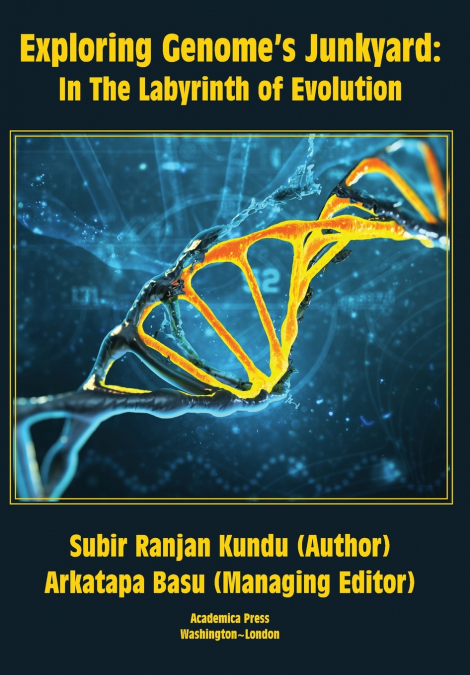
  • Exploring Genome’s Junkyard
    Subir Ranjan Kundu
    Exploring Genome’s Junkyard: In the Labyrinth of Evolution narrates the progress of biological evolution, beginning with the conceptual introspection of gene and continuing with the contemporary understanding of the structural and function aspects of the human genome. Recent advances in human genome research have led scientists to the term 'biological dark matter,' which refers...
  • European Hair, Eye, and Skin Color
    Peter Frost
    Europeans, especially those from northern and eastern Europe, are unique in having diverse hair and eye colors and a skin almost as pale as an albino’s. Those colors are not only brighter than the original black and brown but also 'purer'-they lie within thin slices of the visible spectrum. Overall, that color scheme is more developed in women, who naturally have a higher incid...
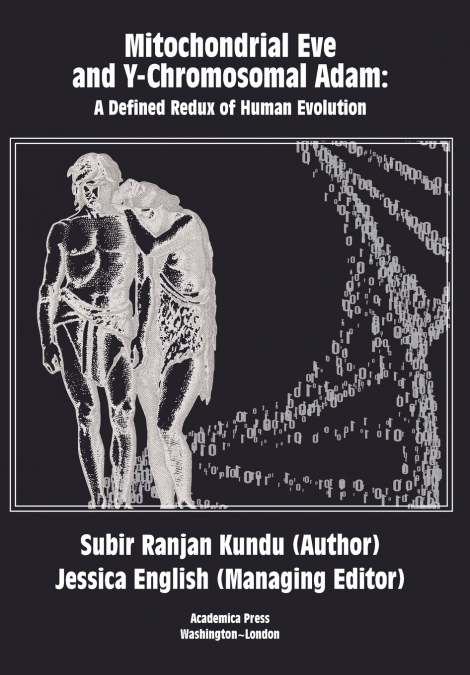
  • Mitochondrial Eve and Y-Chromosomal Adam
    Subir Ranjan Kundu
    Mitochondrial Eve and Y-Chromosomal Adam discusses theoretical ideas, interpretations, and paleontological evidence to narrate the origin and evolutionary story of Sapiens through the transitional stages of archaic human species involved in the evolutionary pilgrimage, from the great apes and to modern humans. Author Subir Ranjan Kundu investigates the DNA footprints of primate...
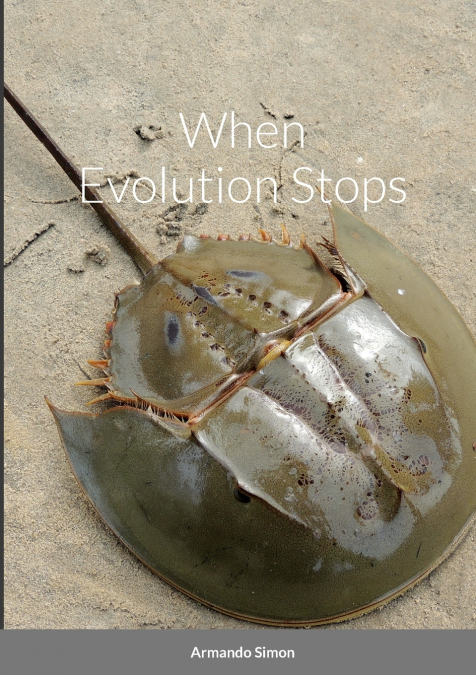
  • When Evolution Stops
    Armando Simon
    Evolution is a fact. The evidence for it is simply overwhelming. However, the original mechanism that generates the evolutionary process, as first put forth simultaneously by Charles Darwin and Alfred R. Wallace and which became known as Natural Selection, has now been seen to be too simplistic by some scientists aside from the hard-core neo-Darwinists who insist that nothing w...
    Disponible

    28,77 €

Otros libros del autor

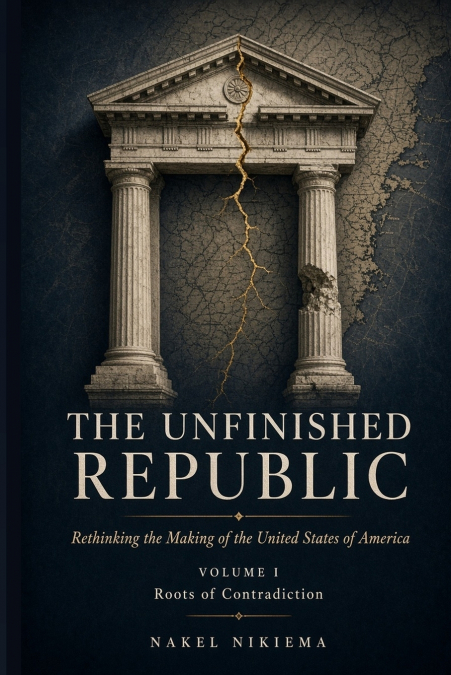
  • THE UNFINISHED REPUBLIC Vol 1 - Roots of Contradiction
    Nakel Nikiema
    The United States tells its founding as a story of opportunity. The documents of 1607 to 1877 tell a narrower story: a republic that kept rewriting the list of who counted.The Unfinished Republic, Volume I follows that list from first colonial settlement through Reconstruction. Nakel Nikiema begins with Native nations already on the land, then the Atlantic slave trade, indentur...
    Disponible

    20,29 €

  • THE UNFINISHED REPUBLIC - Vol 2
    Nakel Nikiema
    The Unfinished Republic, Volume II: Contested Belonging continues the story of the United States by examining what happened after Reconstruction’s constitutional promises collided with exclusion, segregation, immigration restriction, industrial transformation, and competing definitions of who could truly belong.If Volume I explored the foundations of the American contradiction,...
    Disponible

    20,28 €

  • THE FACE OF POWER
    Nakel Nikiema
    What happens when an image becomes more powerful than the evidence behind it?For one of the most recognizable figures in human history, the historical record is remarkably silent. The Gospels tell us what Jesus said, where he traveled, whom he challenged, and how he died. They do not describe his face.Yet billions of people can picture him.The Face of Power: How the Image of Je...
    Disponible

    20,65 €

  • RISING ON OUR OWN
    Nakel Nikiema
    Rising on Our Own: Beyond Aid and Beyond Blame is the 2026 second edition of Nakel Nikiema’s history of African capacity and the argument that follows from it. The book refuses two worn stories: that Africa’s troubles are only someone else’s crime, and that more aid will complete the work. It starts earlier than the partition and it ends later than independence day.The first mo...
    Disponible

    20,24 €

  • THE YES BEHIND THE POLICY
    Nakel Nikiema
    Every year the industry publishes the same number in a slightly different form: American families are underprotected by tens of trillions of dollars. Websites got better. Applications got faster. Prices, in real terms, came down. The gap did not.Nakel Nikiema argues the reason is not ignorance. Most adults already know what life insurance is. The reason is psychological. Decidi...
    Disponible

    13,00 €

  • The Unfinished Republic
    Nakel Nikiema
    The Unfinished Republic retells the making of the United States from the first dispossessions through Reconstruction-not as a finished triumph, but as an argument over who belongs.Ethan Sinclair follows three braided stories: Native nations pushed from their land by seizure and treaty; Africans forced across the Middle Passage and held as property in a republic that called itse...
    Disponible

    34,35 €