Nakel Nikiema
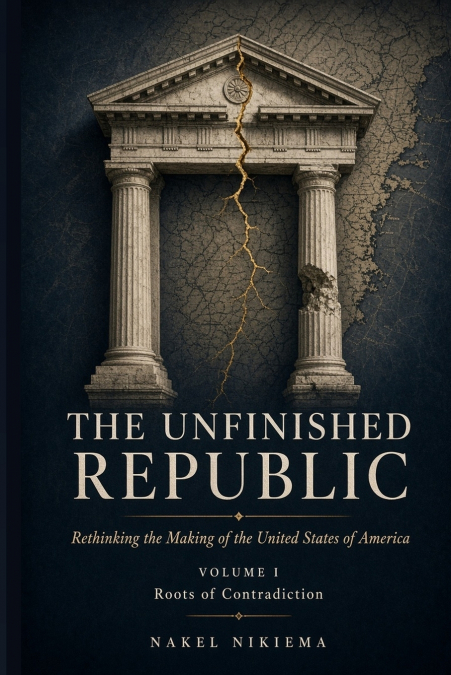
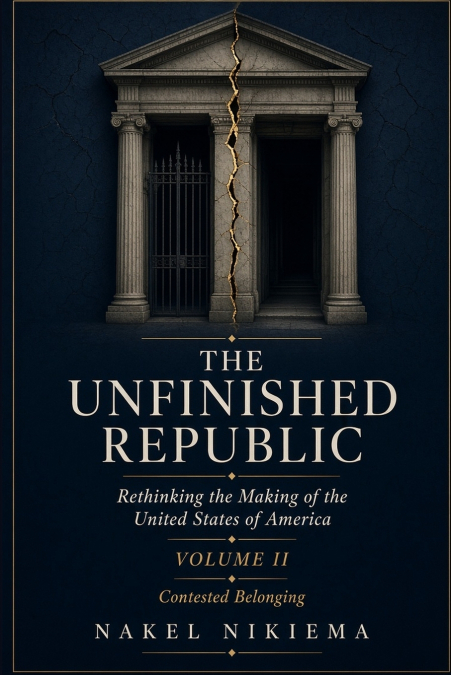
The Unfinished Republic, Volume II: Contested Belonging continues the story of the United States by examining what happened after Reconstruction’s constitutional promises collided with exclusion, segregation, immigration restriction, industrial transformation, and competing definitions of who could truly belong.If Volume I explored the foundations of the American contradiction, Volume II follows that contradiction into a new era. The nation had formally abolished slavery and rewritten its Constitution around citizenship and equal protection, yet belonging remained deeply contested in law, politics, labor, education, migration, and everyday life.This second edition traces how the United States expanded economically and territorially while simultaneously drawing new boundaries around citizenship and identity. It examines the rise of Jim Crow, the retreat from Reconstruction, racial violence and disenfranchisement, Native dispossession and assimilation policies, anti-Asian exclusion, immigration restrictions, industrial migration, labor conflict, and the growing tension between America’s democratic ideals and its systems of exclusion.At the center of the book is a recurring question:Who was allowed to become fully American-and who was expected to remain outside the nation’s political, social, and cultural boundaries?Through legislation, court decisions, political movements, personal experiences, and changing public attitudes, Contested Belonging explores how race, citizenship, nationality, class, and immigration became increasingly intertwined. It also gives sustained attention to the people who resisted those boundaries: Black Americans defending the gains of Reconstruction, immigrants building new communities, Native peoples preserving sovereignty and identity, workers organizing for dignity, and reformers challenging laws designed to exclude.The second edition sharpens the historical framing, clarifies the relationship between federal policy and lived experience, and strengthens the distinction between documented historical evidence and interpretation. Rather than treating exclusion as a series of isolated episodes, it shows how legal definitions of citizenship, racial hierarchy, migration policy, and economic power reinforced one another across generations.Yet this is not simply a history of exclusion. It is also a history of persistence, adaptation, coalition, and the repeated effort to widen the meaning of American citizenship.The American republic did not finish defining belonging when slavery ended. It entered another struggle over who could claim the nation’s rights, protections, and identity.The Unfinished Republic, Volume II: Contested Belonging is written for readers seeking a serious but accessible account of the forces that shaped modern debates over race, immigration, citizenship, equality, and national identity-and why so many of those debates remain unresolved.