Kamaruzzaman Bustamam Ahmad
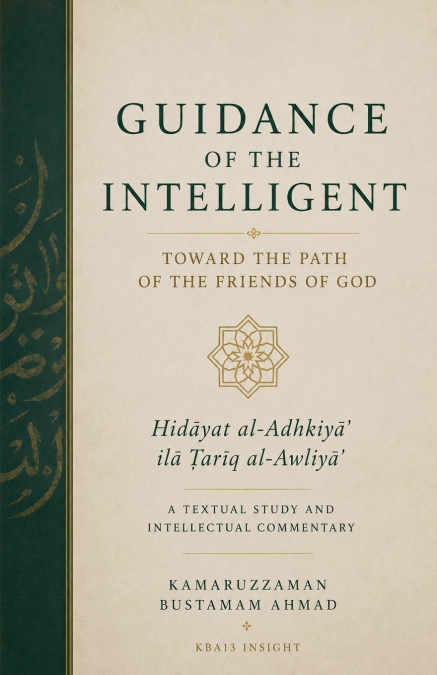
A journey into one of the most influential yet often overlooked texts of the Islamic spiritual tradition.For centuries, Hidāyat al-Adhkiyā’ ilā Ṭarīq al-Awliyā’ by Shaykh Zayn al-Dīn al-Malībārī has guided students of Islamic knowledge across the Indian Ocean world, especially within the Malay-Indonesian pondok and pesantren traditions.This book offers a careful intellectual reading of this classical Sufi poem, exploring how a concise work of spiritual instruction contains a profound vision of knowledge, the human soul, ethical transformation, and the path toward God.Rather than approaching Hidāyat al-Adhkiyā’ merely as a historical document, this study examines its deeper conceptual universe:the relationship between ʿilm (knowledge) and hidāyah (guidance)the spiritual anthropology of the qalb, nafs, and human transformationthe integration of sharīʿah, ṭarīqah, and ḥaqīqahthe stages (maqāmāt) of the Sufi paththe role of adab, sincerity, purification, and spiritual disciplinethe transmission of Islamic learning through Arabic texts and Malay-Jawi scholarshipThrough linguistic analysis, intellectual history, and engagement with the wider Sunni Sufi tradition, this work situates Hidāyat al-Adhkiyā’ within a broader conversation involving classical Islamic spirituality, religious education, and the preservation of knowledge across generations.It also explores how a small didactic poem (naẓm) became a living text - memorized, studied, and transmitted through networks of scholars connecting Arabia, South Asia, and Southeast Asia.This book is written for readers interested in:✓ Islamic philosophy and spirituality✓ Sufism and classical Islamic texts✓ Malay-Indonesian intellectual history✓ Traditional Islamic education✓ The relationship between knowledge, ethics, and inner transformationAt a time when information is abundant but wisdom is increasingly difficult to cultivate, Hidāyat al-Adhkiyā’ invites modern readers to reconsider an older understanding of knowledge: not simply as accumulation of facts, but as the formation of the human being.