Flavor of Meat and Meat Products

Flavor of Meat and Meat Products

Fereidoon Shahidi

118,93 €
IVA incluido
Disponible
Editorial:
Springer Nature B.V.
Año de edición:
1995
Materia
Tecnología de alimentos y bebidas
ISBN:
9780751402179
118,93 €
IVA incluido
Disponible
Añadir a favoritos

1 Flavor of meat and meat products-an overview.- 1.1 Introduction.- 1.2 Meat flavour volatiles.- 1.3 Impact of processing and storage on meat flavour.- References.- 1 Species flavours.- 2 The flavour of beef.- 2.1 Introduction.- 2.2 Taste-active compounds.- 2.3 Flavour enhancers.- 2.4 Aroma components.- 2.4.1 Effect of heat on sugars and/or amino acids.- 2.4.2 Reactions of hydroxyfuranones.- 2.4.3 Thermal degradation of thiamine.- 2.4.4 Lipid oxidation/degradation.- 2.4.5 Selected aroma components of high sensory significance.- 2.5 Conclusion.- References.- 3 The flavour of pork.- 3.1 Introduction.- 3.2 Role of lipid degradation products in pork flavour.- 3.3 Heterocyclic constituents of pork aroma.- 3.4 Polysulphides in roasted pork.- 3.5 Effects of ingredients on the flavour of pork.- References.- 4 The flavour of poultry meat.- 4.1 Introduction.- 4.2 Primary odorants of chicken broth.- 4.3 Sulphur-containing compounds in chicken flavours.- 4.4 Lipid oxidation products in chicken flavour.- 4.5 Heterocyclic compounds in chicken flavour.- 4.5.1 Pyrazines.- 4.5.2 Pyridines.- 4.5.3 Pyrroles.- 4.5.4 Thiazoles.- 4.6 Conclusion.- References.- 5 Sheepmeat odour and flavour.- 5.1 Introduction.- 5.2 Assessment of sheepmeat odour and flavour by sensory panels and chemical analysis.- 5.3 The tissue source of mutton odour and flavour.- 5.4 Chemical components involved in sheepmeat odour and flavour.- 5.5 Factors affecting sheepmeat odour and flavour.- 5.5.1 Pre-slaughter factors.- 5.5.2 Post-slaughter factors.- 5.6 Concluding remarks.- Acknowledgments.- References.- 2 Role of meat constituents and processing on flavour.- 6 Umami flavour of meat.- 6.1 Introduction.- 6.2 Definitions.- 6.3 Historical background.- 6.4 Structural considerations.- 6.5 Stability.- 6.6 Synergism.- 6.7 Taste properties.- 6.8 Food occurrence.- 6.9 Umami compounds and meat flavour.- 6.10 Conclusions.- References.- 7 Lipid-derived off-flavours in meat-formation and inhibition.- 7.1 Introduction.- 7.2 Role of lipids in meat flavour.- 7.3 Lipid oxidation in meats.- 7.3.1 Role of haem and nonhaem iron as catalysts.- 7.3.2 Ferritin as a catalyst of lipid oxidation in meat.- 7.4 Initiation of lipid oxidation in muscle tissue.- 7.4.1 Initiators of the oxidation reaction.- 7.4.2 Enzymatic lipid oxidation.- 7.5 Prevention of lipid oxidation in meats.- 7.5.1 Antioxidant role of nitrite.- 7.5.2 Stabilization of meat lipids with nitrite-free curing mixtures.- 7.5.3 Vitamin E and meat quality.- 7.5.4 Spice extracts as antioxidants.- 7.6 Future research needs.- Acknowledgments.- References.- 8 Lipid oxidation in meat by-products: effect of antioxidants and Maillard reactants on volatiles.- 8.1 Introduction.- 8.2 Materials and methods.- 8.2.1 Materials.- 8.2.2 Chemical analysis of meat-meal.- 8.2.3 Analysis of volatiles in dry meat-meal.- 8.2.4 Analysis of volatiles in processed Maillard meat-meal water mixtures.- 8.3 Results and discussion.- References.- 9 Maillard reactions and meat flavour development.- 9.1 Introduction.- 9.1.1 Meat flavour.- 9.2 The Maillard reaction.- 9.3 The Maillard reaction and meat flavour compounds.- 9.3.1 Low molecular weight precursors of meat flavour.- 9.3.2 Pyrazines.- 9.3.3 Sulphur compounds.- 9.3.4 Synthetic flavours from the Maillard reaction.- 9.4 Summary.- References.- 10 The flavour of cured meat.- 10.1 Introduction.- 10.2 Advantages of nitrite in the meat-curing process.- 10.3 Antioxidant role of nitrite in cured meats.- 10.4 Chemistry of cured-meat flavour.- 10.5 Conclusion.- References.- 11 Contribution of smoke flavourings to processed meats.- 11.1 Introduction.- 11.2 Pyrolysis of cellulose.- 11.3 Pyrolysis of hemicellulose.- 11.4 Pyrolysis of lignin.- 11.5 Smoke colour formation in processed meats.- 11.6 Smoke flavour in processed meats.- 11.7 Fractionation of smoke flavourings.- 11.8 Miscellaneous contributions of smoke flavourings.- 11.9 Summary.- References.- 12 Some aspects of the chemistry of meat flavour.- 12.1 Introduction.- 12....
Artículos relacionados

  • Improving the quality of apples
    Fabrizio Costa
    This collection reviews the wealth of recent research undertaken on the factors which can determine the quality of apples, focussing on attributes such as texture and nutritional content. The book also considers how these attributes can be optimised at both the pre- and postharvest stages in the value chain for apples as a means of meeting the increasing expectations and demand...
    Disponible

    234,72 €

  • FOOD CHEMISTRY
    V. Ramani Alex
    This enlightening guide explores the chemical intricacies of what we eat. It unravels the basic chemical substances that constitute our food, and the methods through which these can be analyzed, providing a comprehensive understanding of what we consume. The book delves into how food supports our well-being, focusing on the essential nutrients required for our biochemical proce...
    Disponible

    21,52 €

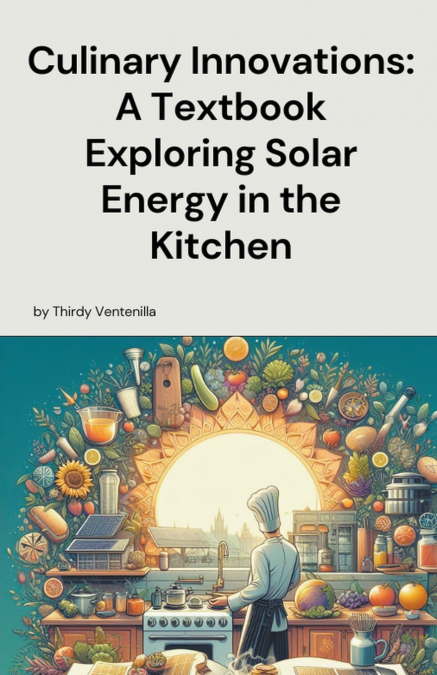
  • Culinary Innovations
    Thirdy Ventenilla
    'Culinary Innovations: A Textbook Exploring Solar Energy in the Kitchen' is a comprehensive manual that delves into the intersection of solar energy and culinary artistry. Through a blend of scientific exploration and practical application, this book offers readers a unique journey into the world of eco-friendly cooking powered by sunlight.The book begins by demystifying solar ...
    Disponible

    12,83 €

  • Chemical Changes in Lipid After Heat Treatment of The Meat
    Mitre Stojanovski
    Meat is a rich source of lightly-digestible proteins, fats, and minerals. The meat contains all the necessary nutrients in an appropriate ratio for maximum utilization by the human organism, and as a result, the meat is characterized by high digestibility of 96% and utilization of 98%, thus bringing meat into a high biological food product and nutritional value.The meat as a fo...
    Disponible

    47,76 €

  • Innovations in Engineering and Food Science
    As the global population continues to grow, the depletion of Earth’s resources poses a significant challenge in ensuring food security for current and future generations. This book addresses this pressing issue by presenting innovative strategies and methods to reduce food loss, enhance production, identify alternative ingredients, and digitize the food system. It explores topi...
    Disponible

    262,26 €

  • Molecular Mechanism of Sheath Blight Tolerance in Rice
    Pankajini Samal
    Rice being the most important cereal of not only in India but in most of the Asian and African countries and also the most important cereal second to wheat only. In India the average productivity of rice is approximately 3.4 t/h which is much below than its highest productivity. The major constraints of rice production are different stresses which include both biotic and abioti...

Otros libros del autor

  • Nutraceutical and Specialty Lipids and their Co-Products
    Fereidoon Shahidi
    In Nutraceutical and Specialty Lipids and their Co-Products Fereidoon Shahidi, editor-in-chief of the Journal of Food Lipids, brings together top researchers to address the potential application and delivery of lipids in functional foods. Sharing much of their own research, they offer an unparalleled view of the field that covers basic lipid chemistry, as well as progressive fi...
    Disponible

    113,66 €

  • Flavor of Meat and Meat Products
    Fereidoon Shahidi
    Flavour is an important sensory aspect of the overall acceptability of meat products. Whether we accept or reject a food depends primarily on its flavour. Both desirable and undesirable flavour effects are contemplated. Furthermore, threshold values of different flavour-active compounds have an important effect on the cumulative sensory properties of ...
    Disponible

    121,50 €

  • Canola and Rapeseed
    Fereidoon Shahidi
    Canola is one of the most important oilseed crops of the world, as its production over the last 10 years has grown much faster than any other source of edible vegetable oil. The short history of the food use of canola oil in Western countries has been marked by its GRAS (generally recognized as safe) accreditation by the USFDA (United States Food and ...
    Disponible

    65,89 €

  • Canola and Rapeseed
    Fereidoon Shahidi
    1: Production and Seed Improvement.- 1 Rapeseed and Canola: Global Production and Distribution.- 2 North American Production of Canola.- 3 Agronomy of Canola in the United States.- 4 New Developments in Canola Research.- 5 The Role of Biotechnology in Canola/Rapeseed Research.- 2: Chemistry, Analysis, and Nutritional Effects.- 6 Canola Fatty Acids-An Ideal Mixture for Health, N...
    Disponible

    118,90 €