Renee Clark / Roggie Clark
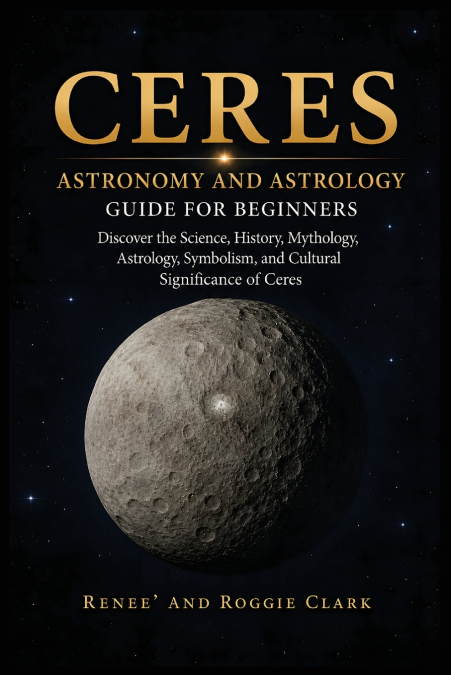
Ceres may be small compared with the major planets, but it holds an extraordinary place in our solar system. Located within the asteroid belt between Mars and Jupiter, Ceres is the largest object in the asteroid belt and the only dwarf planet found in the inner solar system. From its discovery in 1801 to the remarkable images and scientific data returned by NASA’s Dawn mission, Ceres has helped scientists better understand the formation and evolution of our planetary neighborhood.This beginner-friendly guide explores Ceres through both the lens of modern astronomy and the traditions of astrology. Along the way, you’ll discover how Ceres formed, its rocky and icy composition, mysterious bright areas, enormous craters, and evidence of water and geological activity. You’ll also learn about the history of its discovery, its changing classification over time, and why scientists continue to study Ceres for clues about the early solar system.Beyond the science, you’ll explore the mythology behind Ceres and its traditional role in astrology. Learn how the Roman goddess Ceres became associated with agriculture, nourishment, motherhood, abundance, loss, renewal, and the cycles of nature, and discover how these themes later influenced the symbolic meanings associated with Ceres in modern astrology.Inside, you’ll find information about exploring Ceres, understanding its scientific importance, discovering its mythological origins, and learning how astronomy and astrology provide very different perspectives on this fascinating dwarf planet.Whether you’re interested in astronomy, astrology, mythology, dwarf planets, or simply expanding your knowledge of the solar system, this guide offers an engaging and balanced introduction to Ceres for beginners.