Renee Clark / Roggie Clark
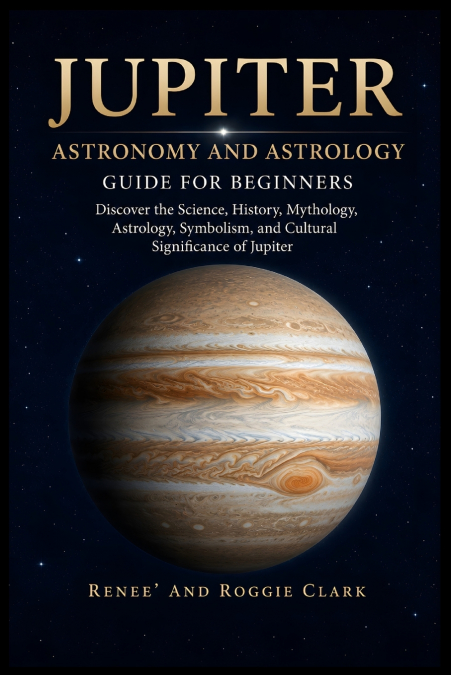
Jupiter is the largest planet in our solar system and one of the most spectacular objects in the night sky. Known for its colorful cloud bands, powerful storms, and iconic Great Red Spot, Jupiter has fascinated astronomers and skywatchers for centuries. Its immense size, dozens of moons, and influential role in shaping the solar system make it one of the most important planets for scientific study.This beginner-friendly guide explores Jupiter through both the lens of modern astronomy and the traditions of astrology. You’ll discover how Jupiter formed, its immense atmosphere, powerful magnetic field, intricate ring system, and the remarkable collection of moons that orbit this giant planet. You’ll also learn about the history of Jupiter observations, groundbreaking space missions, and the discoveries that continue to transform our understanding of the largest planet in our cosmic neighborhood.Beyond the science, you’ll explore Jupiter’s rich mythology and its traditional role in astrology. Learn why Jupiter has long been associated with growth, abundance, wisdom, optimism, opportunity, higher learning, good fortune, and expansion while gaining an appreciation for the cultural traditions that have connected this magnificent planet to kings, gods, and prosperity throughout history.Inside, you’ll find information about observing Jupiter, understanding its scientific importance, exploring its mythological origins, and learning how astronomy and astrology each provide unique perspectives on one of the solar system’s most awe-inspiring worlds.Whether you’re interested in astronomy, astrology, mythology, or simply expanding your knowledge of the solar system, this guide offers an engaging and balanced introduction to Jupiter for beginners.