Dr. Ali Mohamed Salah
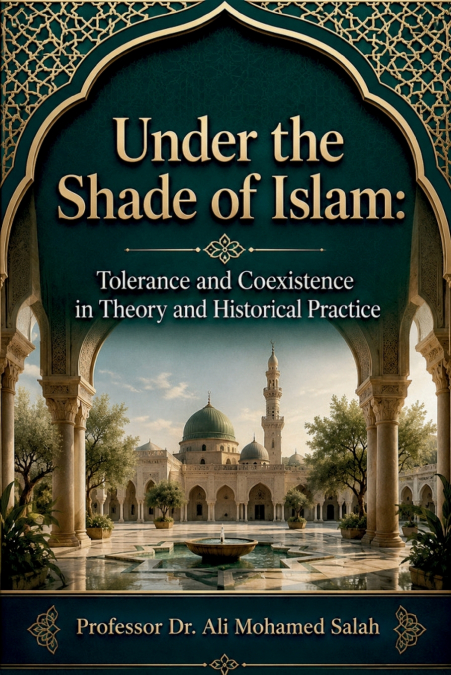
Under the Shade of Islam: Tolerance and Coexistence - Theory, Historical Application, and Contemporary Practice presents a scholarly yet accessible study of one of the most urgent questions in modern religious and civic life: how does Islam understand and practise tolerance and peaceful coexistence with people of other faiths?Written by Professor Dr. Ali Mohamed Salah - a scholar of Islamic Studies and Comparative Religion based in Oslo, Norway, with over thirty years of academic and community leadership - this book draws on the Qurʾan, the Sunnah, the life of the Prophet Muhammad ﷺ, and the experience of the early Muslim community to present the Islamic foundations of tolerance with clarity, balance, and scholarly rigour.The book is organised into four substantive chapters. Chapter One examines the foundational nature of tolerance in Islam’s relationship with others, distinguishing Islamic tolerance from modern relativism and showing how the Qurʾan establishes a framework of justice, mercy, covenant, and human dignity as the basis for engagement with difference. Chapter Two explores peaceful coexistence within the Islamic society during the Prophetic era and the era of the Rightly Guided Caliphs - covering freedom of belief, the Covenant of Najrān, the Zoroastrians of Hajar, the Conquest of Makkah, and the policies of Abū Bakr, ʿUmar, ʿUthmān, and ʿAlī toward religious minorities. Chapter Three provides a detailed study of the Dhimmah covenant - the legal framework governing non-Muslim communities under Islamic authority - examining their rights to freedom of opinion, property, security, public office, and support from the public treasury, as well as the legal basis of jizyah and kharāj. Chapter Four addresses religious conflict and its negative impact on peaceful coexistence, including the importance of fulfilling covenants and agreements, termination of the Dhimmah contract, the Prophet’s dealings with the Jewish tribes of Madinah, and Islamic justice and tolerance in the eyes of Western observers.A concluding chapter draws together the book’s findings and proposes a balanced approach for Muslims living in pluralistic Western societies - preserving Islamic identity without isolation, engaging without dilution, and upholding justice toward others without compromising religious conviction.Complete with a Glossary of Key Islamic and Jurisprudential Terms, a full Bibliography, an Index of Qurʾanic Verses, and an Index of Prophetic Narrations, this is essential reading for Muslims and non-Muslims alike - students of Islamic studies, scholars of comparative religion, interfaith practitioners, community leaders, and anyone seeking a fair-minded, historically grounded understanding of Islam’s relationship with religious difference. 6