PrénomSadok Abdelli
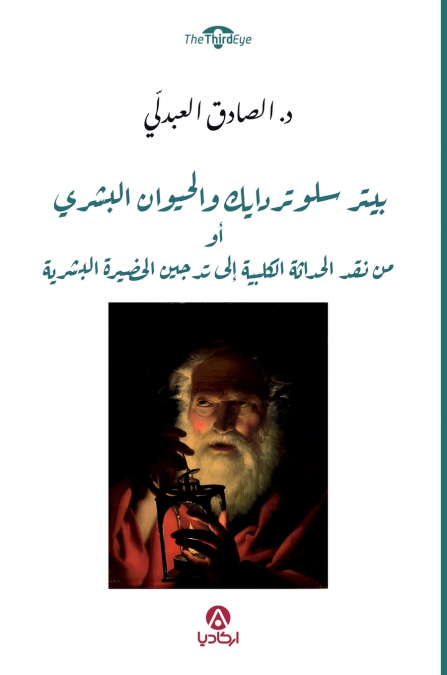
By Dr. Sadok AbdelliThis scholarly work offers an in-depth critical examination of the philosophy of Peter Sloterdijk, one of the most provocative and influential thinkers of contemporary European philosophy. Through a rigorous analytical lens, Dr. Sadok Abdelli traces the arc of Sloterdijk’s intellectual project from its early radical critique of modernity to its mature anthropological investigations into what it means - and what it costs - to be a human animal in the twenty-first century.Peter Sloterdijk has never been a philosopher of comfort. Since the publication of his monumental Critique of Cynical Reason in 1983, he has consistently challenged the assumptions underlying Western rationalism, liberal humanism, and the Enlightenment project as a whole. His diagnosis of cynicism as the dominant ideological condition of late modernity - a knowing, disillusioned acquiescence to the very structures one criticizes - remains one of the most penetrating analyses of contemporary consciousness. Dr. Abdelli revisits this foundational text through an Arabic philosophical tradition, asking what it means for a civilization emerging from colonial modernity to encounter a thinker who dismantles modernity from within.The central thread of this book follows Sloterdijk’s evolving conception of the human being not as a rational subject, but as a practicing animal - a creature defined not by its capacity for reason, but by its capacity for self-transformation through technique, ritual, and discipline. This vision reaches its fullest expression in Sloterdijk’s You Must Change Your Life (2009), where he proposes the concept of anthropotechnics: the systematic practices through which human beings shape themselves, their capacities, and their social worlds. Dr. Abdelli engages deeply with this concept, examining its implications for questions of ethics, politics, education, and the future of human civilization.A particularly important focus of this study is Sloterdijk’s essay Rules for the Human Zoo - a text that generated enormous controversy in Germany and beyond. In it, Sloterdijk revisits the Heideggerian question of humanism and asks whether the traditional mechanisms of human domestication - literature, philosophy, education - have lost their power to tame the 'human beast.' The essay opens onto disturbing questions about the future of human self-regulation: if the classical humanistic techniques of self-cultivation have failed, what will take their place? Genetic engineering? Neurotechnology? Political violence? Dr. Abdelli reads these questions not merely as European anxieties, but as universal ones - questions that concern any society grappling with the tension between inherited traditions of human formation and the disruptive forces of technological modernity.The book also engages with Sloterdijk’s trilogy Spheres - his most ambitious philosophical undertaking - in which he proposes that human beings are fundamentally sphere-dwelling creatures: beings who exist not in neutral space, but in intimate, constructed environments of togetherness. The sphere - whether the dyadic intimacy of mother and child, the social globe of shared culture, or the fragmented foam of contemporary urban isolation - is Sloterdijk’s answer to the question of how human life is always already situated, protected, and threatened. Dr. Abdelli explores the resonances between this philosophical topology and the spatial, social, and political experience of Arab modernity, where questions of belonging, displacement, and the destruction of inherited worlds carry an urgency that no purely European framework can fully address.