Inicio > Humanidades > Filosofía > Ética y filosofía moral > Toxic Marriage of Transhumanism, AI and Eugenics
Toxic Marriage of Transhumanism, AI and Eugenics

Toxic Marriage of Transhumanism, AI and Eugenics

Irina Kuzminsky

27,05 €
IVA incluido
Disponible
Editorial:
InterActions
Año de edición:
2026
Materia
Ética y filosofía moral
ISBN:
9781915594129
27,05 €
IVA incluido
Disponible
Añadir a favoritos

Irina Kuzminsky’s new book confronts the history, promises and dangers of transhumanism and human ’enhancement’, addressing the two core questions underlying the whole transhumanist debate: what is a human being, and what is consciousness?Transhumanism is emerging as a new secular faith, distorting and inverting spiritual traditions of human transcendence, and positioning itself as a new religion, with artificial intelligence (AI) as its enabler. This new ’religion’ is arriving at a much faster speed than our wisdom around it. The ’Superhuman’ AI, supposedly imminent, is projected to outstrip all human abilities and render humans obsolete and expendable - except for the promoters, who see themselves as the privileged elite. This raises another troubling aspect of the ’toxic marriage’: eugenics, with the author exposing in detail the shocking views of many of the influential and wealthy transhumanist proponents who see no problem with proposing the active reduction of the world population. The crux with transhumanism: if we start defining ourselves as comparable to the machines we ourselves have created, we are welcoming in our own devolution. In the words of Anne Baring, 'The aim of this inhuman technology seems to be to eliminate our emotional intelligence: our capacity to feel, to imagine, to create, to dream, to love...' A child’s life is judged in comparison to the utility of an AI. Humans are nothing special, just an entry on a balance sheet to be assessed in terms of data, efficiency and economic worth. Against this Kuzminsky places the image and conviction of the transcendence of the human soul and spirit, through the realisation of our higher self.The book is unique on another score: the Kuzminsky is not only a researcher, but a poet and artist as well, and her art work and poetry is displayed throughout the book.Each of the 22 chapters is introduced by one of her paintings followed by a poem, both related to the theme of the following pages. The author approaches the topic of transhumanism also from a background of deep exploration into the significance of the Sacred Feminine and its relevance for the topic of the book and for our time. This book is a gripping meditation on evolution, identity, the sacredness of life and the soul of humanity itself.
Artículos relacionados

  • Ka Ab Ba Building The Lighted Temple
    Dr Terri R. Nelson / Dr Terri RNelson
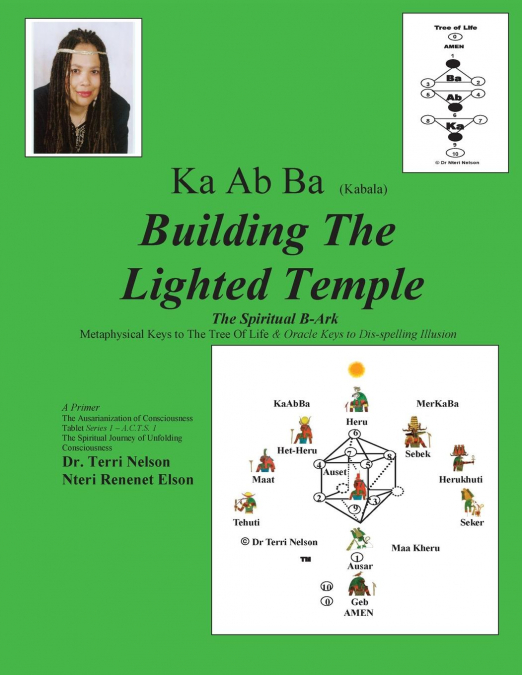
    The book KaAbBa Building The Lighted Temple/Metaphysical Keys to the Tree of Life draws a circle that is inclusive of the Afrikan origin of the Ancient Kemetic/Egyptian wisdom. It reveals the undeniable root and link of Ancient Africa to all the religious systems that would develop worldwide. This book is explosive in its power to convey the meaning of KaAbBa, the Medu Neter  (...
    Disponible

    37,41 €

  • Technoethics and the Evolving Knowledge Society
    Rocci Luppicini
    Recently, there has been a major push to rediscover the ethical dimension of technology across the sciences, social sciences, and humanities. Technoethics and the Evolving Knowledge Society: Ethical Issues in Technological Design, Research, Development, and Innovation examines human processes and practices connected to technology embedded within social, political, and moral sph...
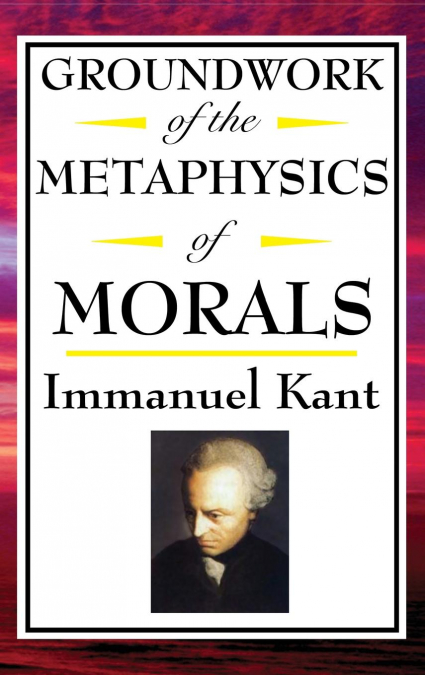
  • Kant
    Immanuel Kant
    Kant’s Groundwork of the Metaphysics of Morals is one of the most important works in modern moral philosophy. It belongs beside Plato, Aristotle, Machiavelli, and Hobbes. Here Kant sets out to articulate and defend the Categorical Imperative - the fundamental principle that underlies moral reasoning - and to lay the foundation for a comprehensive account of justice and human vi...
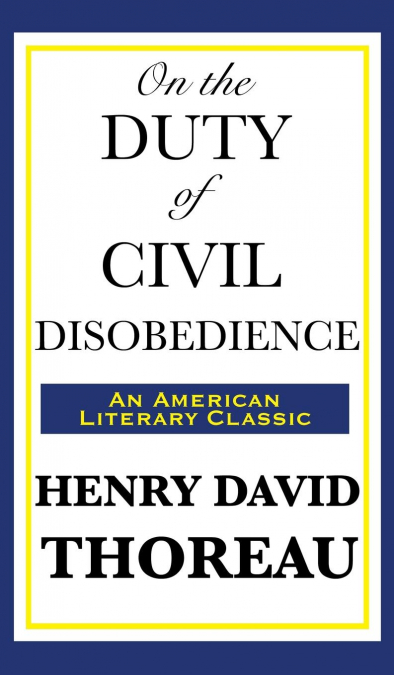
  • On the Duty of Civil Disobedience
    HENRY DAVID THOREAU
    Civil Disobedience argues that citizens should not permit their governments to overrule their consciences, and that they have a duty to avoid allowing their acquiescence to enable the government to make them the agents of injustice. Thoreau was motivated in part by his disgust with slavery and the Mexican-American War, but the sentiments he expresses here are just as pertinent ...
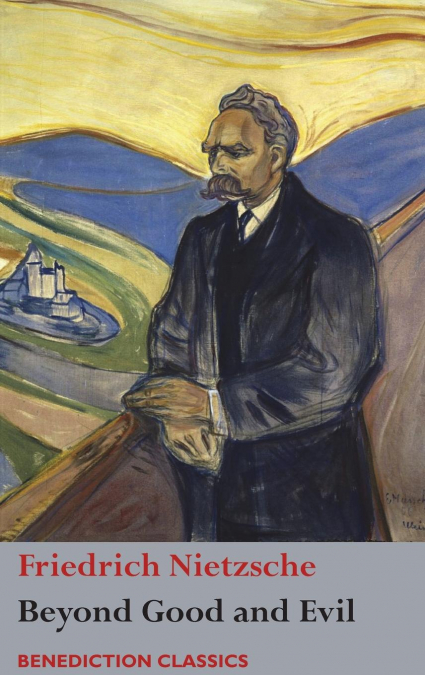
  • Beyond Good and Evil
    Friedrich Nietzsche
    Nietzsche, though primarily a philosopher, wrote widely on art, philology, history, religion, tragedy, culture, and science.  In 1886, at the height of his powers, he published Beyond Good and Evil.  Here he examines much of the best of human thought--dogmatic philosophy, Judeo-Christian morality, science and democracy – and finds it lacking.  Rejecting “slave-morality” he pres...
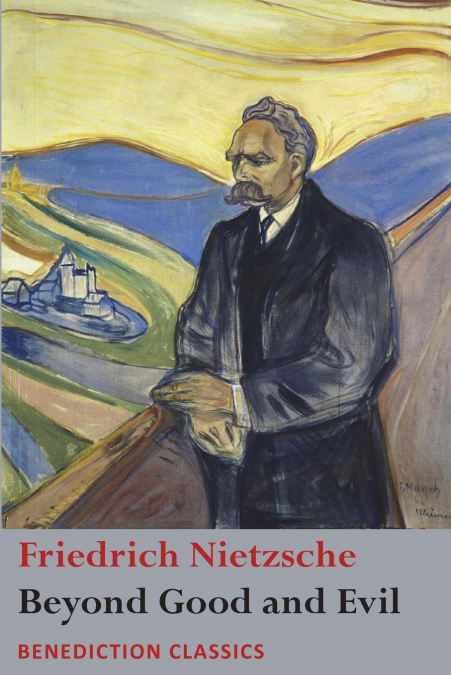
  • Beyond Good and Evil
    Friedrich Nietzsche
    Nietzsche, though primarily a philosopher, wrote widely on art, philology, history, religion, tragedy, culture, and science.  In 1886, at the height of his powers, he published Beyond Good and Evil.  Here he examines much of the best of human thought--dogmatic philosophy, Judeo-Christian morality, science and democracy – and finds it lacking.  Rejecting “slave-morality” he pres...
    Disponible

    9,99 €

Otros libros del autor

  • In Memory of Her
    Irina Kuzminsky
    Who was Mary Magdalene and why has her voice been silenced? She beckons to us through the shrouds of history, a woman of such spiritual stature that she became the first to open our consciousness to the risen Christ. She brings a vision of a Christianity in which masculine and feminine meet as intimate and equal partners. A vision never more needed than today. Irina Kuzminsky’s...
    Disponible

    19,19 €