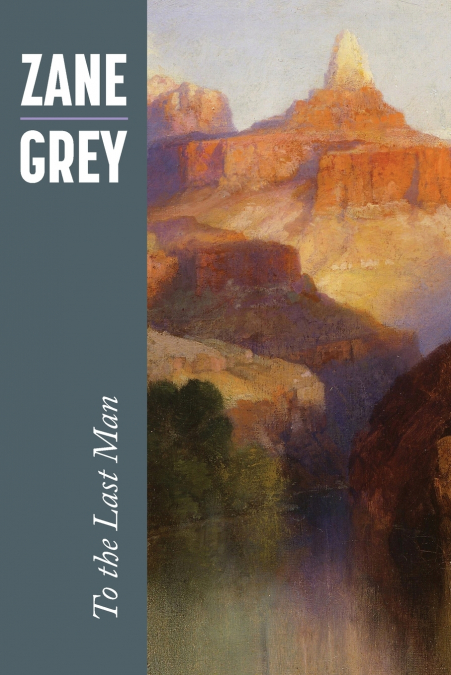
Zane Grey
Published in 1921, Zane Grey’s To the Last Man dramatizes the historical Pleasant Valley War of late nineteenth-century Arizona. It focuses on a brutal range conflict between cattlemen and sheep ranchers into an exploration of frontier vendetta, morality, and social order. The work is focused on the lethal feud between the Isbel and Jorth families. These are fictionalized counterparts to the historical Tewksbury and Graham families, the true story the novelization is based on. Grey structures this cycle of annihilation around the romantic tension between Jean Isbel and Ellen Jorth, employing a classic tragic romance framework to critique the self-destructive nature of inherited hatred. The novel serves as an examination of the psychological toll of isolation and the violent transition from territorial lawlessness toward civil modernization.Zane Grey (1872-1939) was a significant contributor to the Western genre. A former dentist who abandoned his practice to pursue writing and wilderness exploration, Grey achieved commercial success in the early twentieth century. His work is distinguished by a romanticized vision of the American frontier, marked by vivid, expansive topographical descriptions in which the southwestern landscape operates as a catalyst for moral clarity. Grey wrote extensively, but contemporary literary scholarship often notes the ideological limitations and formulaic conventions of his plots. Grey’s work is interesting to study in the larger concept of popular mythmaking. His work shows the anxieties of a rapidly industrializing nation seeking nostalgia, rugged individualism, and national identity in the fading mythology of the open frontier.