Etienne Psaila
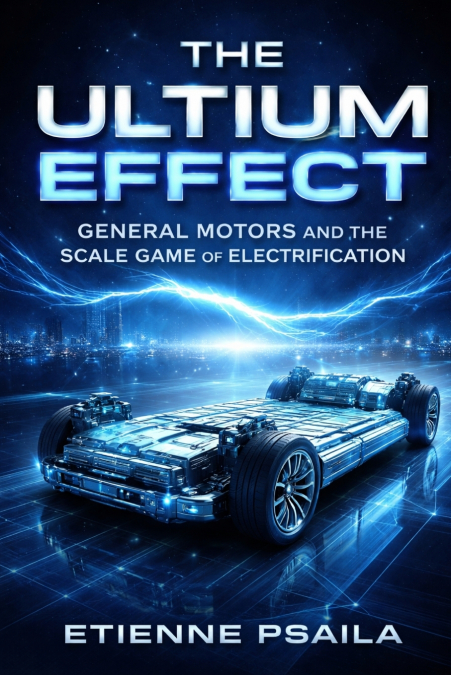
General Motors did not bet its EV future on a single breakthrough car. It bet on a repeatable system-shared batteries, motors, software, and manufacturing methods designed to spread across Chevrolet, GMC, and Cadillac, from mainstream crossovers to extreme halo trucks. The Ultium Effect follows how that modular strategy is meant to turn electrification into an industrial advantage: lowering costs through reuse, improving quality through repetition, and accelerating launches by building from common building blocks rather than reinventing fundamentals for every nameplate.But the EV era is not won by ambition alone. As incentives shift, charging ecosystems evolve, and software becomes as critical as hardware, the real contest moves from prototypes to production lines and from marketing claims to customer trust. This book traces where scale delivers leverage-and where it exposes weak links-showing why legacy manufacturers must master factories, supply chains, and validation discipline as rigorously as they master technology.Written in a clear, narrative style grounded in verifiable developments, The Ultium Effect is both a portrait of GM’s electrification experiment and a wider explanation of what the EV transition demands from any automaker trying to compete on volume. In the end, the lesson is simple and unforgiving: electrification rewards the companies that can build the same revolution-reliably, profitably, and at scale.