The Enchiridion

The Enchiridion

Epictetus / William Abbott Oldfather

13,28 €
IVA incluido
Disponible
Editorial:
Fourth Initiate
Año de edición:
2026
Materia
Ética y filosofía moral
ISBN:
9798952952690
13,28 €
IVA incluido
Disponible
Añadir a favoritos

FREEDOM BEGINS WITH KNOWING WHAT IS YOURS.Nearly two thousand years ago, the teachings of Epictetus were distilled into one of philosophy’s most enduring handbooks for living: The Enchiridion.Its opening distinction is deceptively simple: some things are within our power, and others are not. From that foundation comes a radical philosophy of freedom-one concerned not with controlling the world, but with refusing to surrender the self to what cannot be controlled.Desire. Fear. Reputation. Loss. Anger. Possession. Duty. Mortality. Other people. Fortune itself.Again and again, The Enchiridion asks the same underlying question:What truly belongs to you?This Fourth Initiate Edition presents Epictetus alongside extensive original annotations that place his ideas in conversation with philosophy, psychology, science, history, religion, symbolism, metaphysics, paradox, and the enduring problems of human nature.These annotations do not merely explain Stoicism.They question it. Test it. Extend it. Challenge its assumptions. Connect ancient insights to modern thought. And use individual passages as doors into larger questions of agency, identity, consciousness, morality, suffering, desire, belief, freedom, and what it means to live deliberately.This is not a collection of simplified Stoic slogans.It is an invitation to think with Epictetus-and, when necessary, against him.What happens when acceptance becomes surrender? When self-control becomes repression? When virtue conflicts with compassion? When ancient certainty encounters modern psychology? When the philosophy meant to free us is itself placed under examination?The Enchiridion asks you to surrender what was never yours to command.The greater question is what you will do with what remains.FOURTH INITIATE LIBRARY - BOOK #003Read. Contemplate. Become.
Artículos relacionados

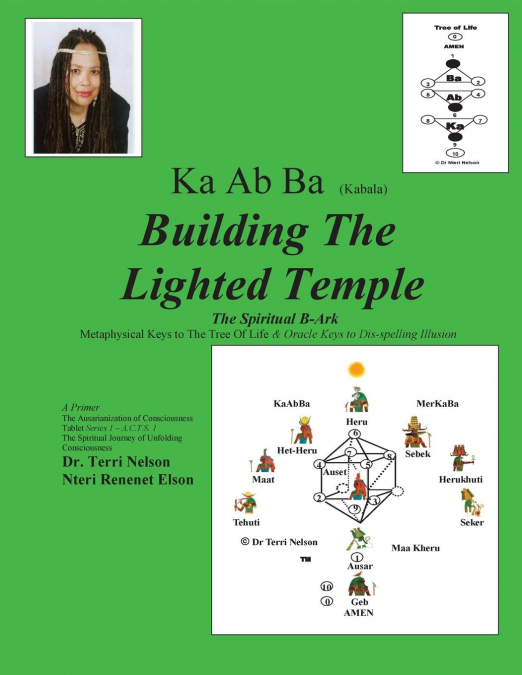
  • Ka Ab Ba Building The Lighted Temple
    Dr Terri R. Nelson / Dr Terri RNelson
    The book KaAbBa Building The Lighted Temple/Metaphysical Keys to the Tree of Life draws a circle that is inclusive of the Afrikan origin of the Ancient Kemetic/Egyptian wisdom. It reveals the undeniable root and link of Ancient Africa to all the religious systems that would develop worldwide. This book is explosive in its power to convey the meaning of KaAbBa, the Medu Neter  (...
    Disponible

    37,41 €

  • Technoethics and the Evolving Knowledge Society
    Rocci Luppicini
    Recently, there has been a major push to rediscover the ethical dimension of technology across the sciences, social sciences, and humanities. Technoethics and the Evolving Knowledge Society: Ethical Issues in Technological Design, Research, Development, and Innovation examines human processes and practices connected to technology embedded within social, political, and moral sph...
  • Kant
    Immanuel Kant
    Kant’s Groundwork of the Metaphysics of Morals is one of the most important works in modern moral philosophy. It belongs beside Plato, Aristotle, Machiavelli, and Hobbes. Here Kant sets out to articulate and defend the Categorical Imperative - the fundamental principle that underlies moral reasoning - and to lay the foundation for a comprehensive account of justice and human vi...
  • On the Duty of Civil Disobedience
    HENRY DAVID THOREAU
    Civil Disobedience argues that citizens should not permit their governments to overrule their consciences, and that they have a duty to avoid allowing their acquiescence to enable the government to make them the agents of injustice. Thoreau was motivated in part by his disgust with slavery and the Mexican-American War, but the sentiments he expresses here are just as pertinent ...
  • Beyond Good and Evil
    Friedrich Nietzsche
    Nietzsche, though primarily a philosopher, wrote widely on art, philology, history, religion, tragedy, culture, and science.  In 1886, at the height of his powers, he published Beyond Good and Evil.  Here he examines much of the best of human thought--dogmatic philosophy, Judeo-Christian morality, science and democracy – and finds it lacking.  Rejecting “slave-morality” he pres...
  • Beyond Good and Evil
    Friedrich Nietzsche
    Nietzsche, though primarily a philosopher, wrote widely on art, philology, history, religion, tragedy, culture, and science.  In 1886, at the height of his powers, he published Beyond Good and Evil.  Here he examines much of the best of human thought--dogmatic philosophy, Judeo-Christian morality, science and democracy – and finds it lacking.  Rejecting “slave-morality” he pres...
    Disponible

    9,99 €

Otros libros del autor

  • Epictetus’ The Encheiridion
    Epictetus / William Abbott Oldfather
    A concise manual of Stoic wisdom, The Encheiridion presents a collection of short, practical maxims drawn from the teachings of Epictetus. Focusing on the essential distinction between what lies within our power and what does not, known as the dichotomy of control, Epictetus teaches that virtue is the only true good. He argues that life’s difficulties are not obstacles but oppo...
    Disponible

    20,95 €

  • Epictetus’ Discourses
    Epictetus / William Abbott Oldfather
    A foundational work of Stoic philosophy, this collection presents the teachings of Epictetus as recorded by his student, Arrian.Rather than abstract theory, these texts offer direct, often challenging instruction on how to live a rational, ethical, and resilient life, aiming to shape character rather than inform intellect.Epictetus (c. 50-135 AD) was a former slave who became o...
    Disponible

    29,69 €