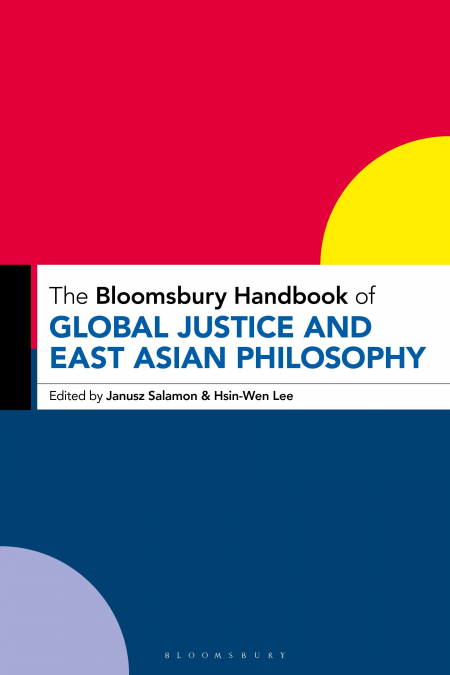
Inicio > Humanidades > Filosofía > Ética y filosofía moral > The Bloomsbury Handbook of Global Justice and East Asian Philosophy
The Bloomsbury Handbook of Global Justice and East Asian Philosophy

The Bloomsbury Handbook of Global Justice and East Asian Philosophy


69,85 €
IVA incluido
Disponible
Editorial:
Bloomsbury Publishing plc
Año de edición:
2026
Materia
Ética y filosofía moral
ISBN:
9781350376663
69,85 €
IVA incluido
Disponible
Añadir a favoritos

Breaking out of the dominance of Anglo-American scholarship, this volume centralises East Asian philosophical traditions to explore cross-cultural perspectives in the field of global justice studies. By bringing together diverse traditions of thinking about justice that contrasts East Asian and Western thinkers’ traditions, it avoids the shortcomings of narrow and one-sided conceptualisations of global justice.A range of contributors from East Asia, Europe, and the US who are conversant with both Western and East Asian philosophical traditions provide a rich engagement with contemporary issues relating to global justice. The book opens with a section devoted to the methodological challenges specific to cross-cultural approaches to justice, including the universalism/particularism debate and the conditions of the possibility of cross-cultural comparisons. Part II explores how major East Asian philosophical traditions-including Confucianism, Legalism, Daoism and Buddhism-consider issues related to global justice. The essays in Part III adopt a cross-cultural and/or comparative perspective on justice, enabling the readers to appreciate similarities and differences between the East Asian and Western perspectives on justice, and to appreciate cultural variation. Key applied issues in global justice, such as epistemic injustice, human rights, women’s rights, nationalism, religious pluralism, coercion, corruption and post-colonial justice, receive full consideration in the final section of this indispensable reference work for understandings of global justice in East Asia specifically and cross-culturally. 6
Artículos relacionados

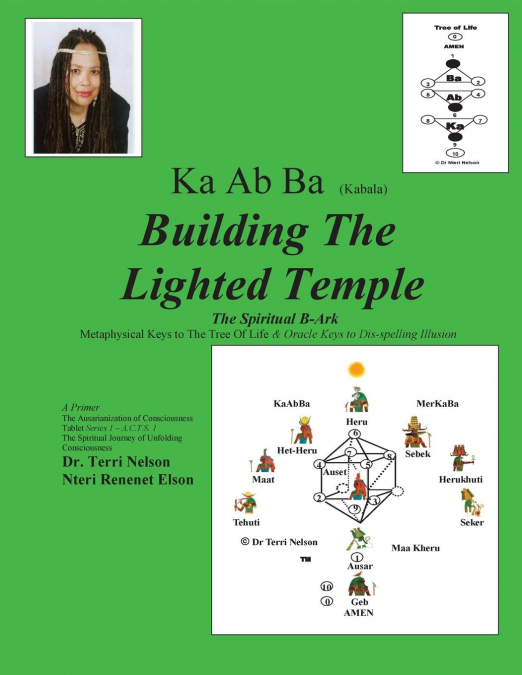
  • Ka Ab Ba Building The Lighted Temple
    Dr Terri R. Nelson / Dr Terri RNelson
    The book KaAbBa Building The Lighted Temple/Metaphysical Keys to the Tree of Life draws a circle that is inclusive of the Afrikan origin of the Ancient Kemetic/Egyptian wisdom. It reveals the undeniable root and link of Ancient Africa to all the religious systems that would develop worldwide. This book is explosive in its power to convey the meaning of KaAbBa, the Medu Neter  (...
    Disponible

    37,41 €

  • Technoethics and the Evolving Knowledge Society
    Rocci Luppicini
    Recently, there has been a major push to rediscover the ethical dimension of technology across the sciences, social sciences, and humanities. Technoethics and the Evolving Knowledge Society: Ethical Issues in Technological Design, Research, Development, and Innovation examines human processes and practices connected to technology embedded within social, political, and moral sph...
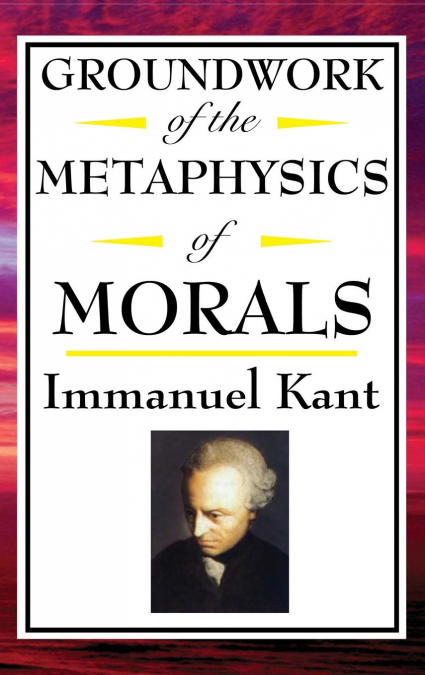
  • Kant
    Immanuel Kant
    Kant’s Groundwork of the Metaphysics of Morals is one of the most important works in modern moral philosophy. It belongs beside Plato, Aristotle, Machiavelli, and Hobbes. Here Kant sets out to articulate and defend the Categorical Imperative - the fundamental principle that underlies moral reasoning - and to lay the foundation for a comprehensive account of justice and human vi...
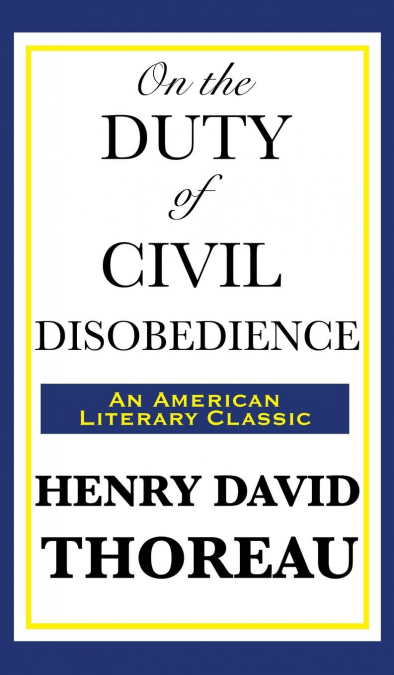
  • On the Duty of Civil Disobedience
    HENRY DAVID THOREAU
    Civil Disobedience argues that citizens should not permit their governments to overrule their consciences, and that they have a duty to avoid allowing their acquiescence to enable the government to make them the agents of injustice. Thoreau was motivated in part by his disgust with slavery and the Mexican-American War, but the sentiments he expresses here are just as pertinent ...
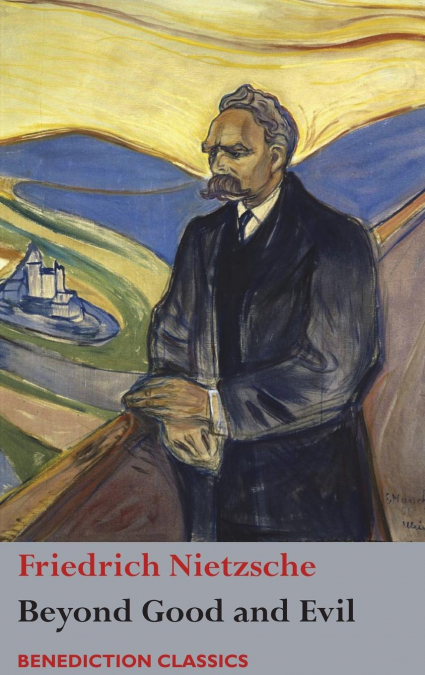
  • Beyond Good and Evil
    Friedrich Nietzsche
    Nietzsche, though primarily a philosopher, wrote widely on art, philology, history, religion, tragedy, culture, and science.  In 1886, at the height of his powers, he published Beyond Good and Evil.  Here he examines much of the best of human thought--dogmatic philosophy, Judeo-Christian morality, science and democracy – and finds it lacking.  Rejecting “slave-morality” he pres...
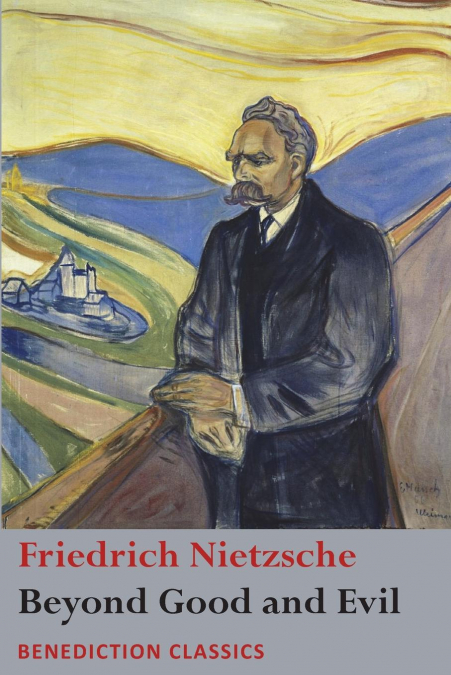
  • Beyond Good and Evil
    Friedrich Nietzsche
    Nietzsche, though primarily a philosopher, wrote widely on art, philology, history, religion, tragedy, culture, and science.  In 1886, at the height of his powers, he published Beyond Good and Evil.  Here he examines much of the best of human thought--dogmatic philosophy, Judeo-Christian morality, science and democracy – and finds it lacking.  Rejecting “slave-morality” he pres...
    Disponible

    9,99 €