Nexara Dolvirn
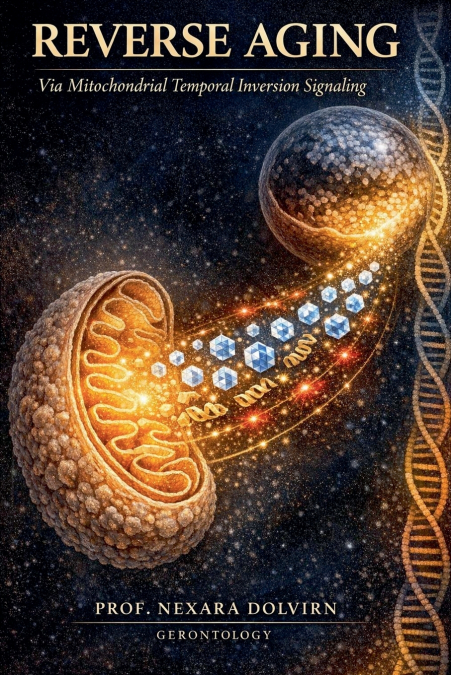
Your cells are aging. Your mitochondria know it. And the signal that could reverse it is already there, waiting to be read.Every cell in your body contains between 1,000 and 2,000 mitochondria. These organelles do not merely supply your cells with energy. They carry information about the direction and rate of change of their own functional status, information that the nucleus reads and uses to set the pace of biological aging. When the mitochondria are declining, they send a signal that accelerates the epigenetic clock. When they are recovering and improving, they send a different kind of signal: a temporal signal that the MTIS framework, Mitochondrial Temporal Inversion Signaling, proposes can reverse the direction of the clock entirely.This is not a metaphor. The epigenetic clock, the DNA methylation-based measurement of biological age developed by Steve Horvath and subsequently refined into GrimAge, PhenoAge, and DunedinPACE, can be moved backward. This has been demonstrated in multiple experimental systems, from partial reprogramming of aged retinal cells by David Sinclair’s laboratory at Harvard, to the CALERIE trial’s demonstration of epigenetic clock slowing with caloric restriction, to the dramatic lifespan extension produced by NAD+ precursor supplementation in aged mammals. The molecular machinery for age reversal exists in every cell. The question is how to activate it reliably and sustainably.In this book, Prof. Nexara Dolvirn proposes a unified mechanistic framework for that activation. The MTIS framework integrates four retrograde signaling nodes, the Membrane Potential Integrator, the NAD+ Trajectory Sensor, the ROS Temporal Encoder, and the Peptide Pulse Generator, into a coherent temporal signal system that encodes not merely the current state of the mitochondria but the direction of their functional change over time. When all four nodes simultaneously generate their positive-trajectory signals, the epigenetic machinery responds by shifting the DNA methylation program toward younger age, through TET2-mediated demethylation of clock CpG sites driven by SIRT6 activation and DNMT3 displacement.Part One provides the scientific foundation: the hallmarks of aging, the evidence for mitochondria as the cell’s primary biological clock, the retrograde signaling pathways through which mitochondria communicate with the nucleus, and the epigenetic clock as a malleable rather than fixed quantity. Part Two develops the MTIS framework in full mechanistic detail, specifying the molecular basis of temporal encoding and introducing the MTIS Composite Score, a four-parameter biomarker system for measuring the MTIS signal state in clinical populations. Part Three translates the framework into evidence-based intervention protocols combining optimized exercise, dietary modification, NAD+ augmentation, selective pharmacological support, and emerging approaches in partial epigenetic reprogramming. Part Four applies the framework to the major age-related diseases, specifies the research program required to validate or falsify MTIS, and presents the unified case for genuine biological age reversal.Every experimental finding cited in this book is published in peer-reviewed literature. The MTIS framework is an original theoretical synthesis, developed with appropriate epistemic precision and explicit falsifiable predictions. This is not a popular science account or a self-help guide. It is a scientific monograph that takes the possibility of age reversal seriously because the evidence requires it to.For readers of David Sinclair’s Lifespan, Andrew Steele’s Ageless, and Venki Ramakrishnan’s Why We Die.