Inicio > Sociedad y ciencias sociales > Sociología y antropología > Antropología > Paleoeconomía y subsistencia durante el Pleistoceno medio en el sur de Iberia
Paleoeconomía y subsistencia durante el Pleistoceno medio en el sur de Iberia

Paleoeconomía y subsistencia durante el Pleistoceno medio en el sur de Iberia

José Antonio Solano Garcia

188,97 €
IVA incluido
Disponible
Editorial:
British Archaeological Reports (Oxford) Ltd
Año de edición:
2024
Materia
Antropología
ISBN:
9781407361291
188,97 €
IVA incluido
Disponible
Añadir a favoritos

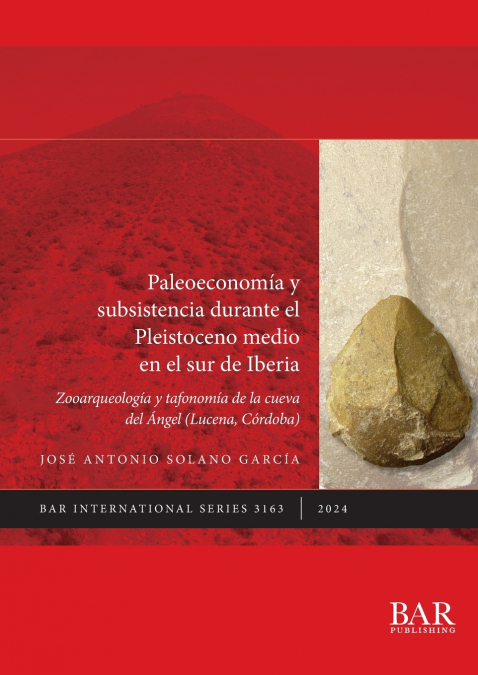
Tradicionalmente, las sociedades preneandertales del Pleistoceno Medio se han caracterizado a menudo como poco desarrolladas, con estrategias de subsistencia muy rígidas y estáticas, centradas en la adquisición de presas monoespecíficas de grandes herbívoros y en el carroñeo regular. Sin embargo, durante la segunda mitad del Pleistoceno medio, con la emergencia del uso del fuego en la Europa mediterránea, se produjo un cambio hacia estrategias más flexibles y dinámicas, casi más propias de los humanos anatómicamente modernos. La cueva del Ángel (Lucena, España) ejemplifica esta tendencia, revelando a través del análisis zooarqueológico y tafonómico un mecanismo de intrincada amplificación económica. Este mecanismo, que combina estrategias de subsistencia tradicionales con innovadoras, desempeñó probablemente un papel crucial en el mantenimiento de la cohesión social dentro del grupo y en el equilibrio de los factores de riesgo. A lo largo de miles de años, estos grupos humanos del sur de Europa demostraron resiliencia y adaptabilidad frente a una importante variabilidad climática entre hace 350.000 y 100.000 años. Traditionally, Middle Pleistocene pre-Neanderthal societies have often been characterized as underdeveloped, with highly rigid and static subsistence strategies focused on acquiring monospecific prey of large herbivores and regular scavenging. However, during the latter half of the Middle Pleistocene, with the emergence of fire use in Mediterranean Europe, a shift towards more flexible and dynamic strategies, reminiscent of anatomically modern humans, occurred. The Cave of the Angel (Lucena, Spain) exemplifies this trend, revealing through zooarchaeological and taphonomic analysis an intricate mechanism of economic amplification. This mechanism, combining traditional subsistence strategies with innovative ones, likely played a crucial role in maintaining social cohesion within the group and balancing risk factors. Over thousands of years, these human groups in southern Europe demonstrated resilience and adaptability in the face of significant climatic variability between 350,000 and 100,000 years ago. 6

Artículos relacionados

  • The jewish community in new england
    Keith Warwick
    The purpose of The Jewish Community in New England is to inform readers about the Jewish community in each of the six New England States: Rhode Island, Connecticut, Maine, Massachusetts, New Hampshire, and Vermont. Factual, inspirational, and poetic, it serves as a scholarly guide to institutions of Jewish life in this dynamic American region. Stocked with valuable information ...
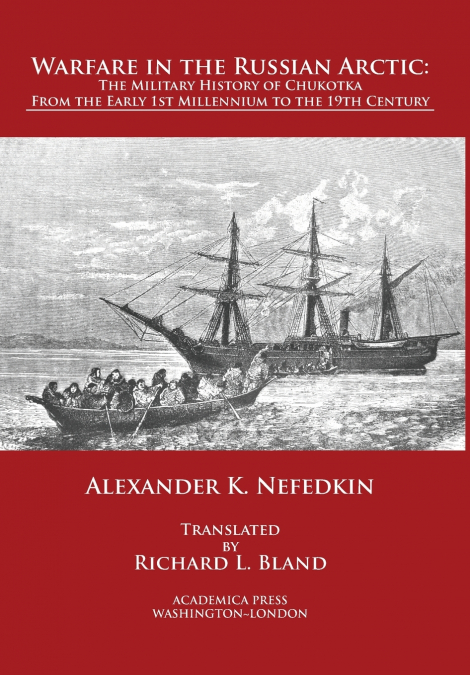
  • Warfare in the Russian arctic
    Alexander K Nefedkin / Richard L Bland
    Alexander Nefedkin’s highly original new book, translated by the noted American scholar Richard L. Bland, is devoted to the understudied topic of the military and military-political history of Chukotka, the far northeastern region of the Russian Federation, separated from Alaska by Bering Strait. This study is based on primary sources, including archaeological, folkloric, and d...
  • Primitive Man as Philosopher
    Paul Radin
    First published in 1927, Primitive Man as Philosopher represents a landmark in early anthropological studies. In this work, Paul Radin demonstrates the problematic nature of distinguishing between 'primitive' and 'civilized' cultures. He traces such ideas as the nature of Goodness and Truth, the meaning of life, and the reality of death across various cultures, highlighting how...
    Disponible

    24,38 €

  • The Economics of Population Growth
    Julian Lincoln Simon
    Comparison with stationary and very fast rates of population growth shows modern population grwoth to have long-run positive effects on the standards of living. This is Julian Simon’s contention, and he provides support for its validity in both more and less-developed countries. He notes that since each person constitutes a burden in the short run, whether population growth is ...
    Disponible

    148,99 €

  • Running Out
    Lucas Bessire
    Finalist for the National Book AwardAn intimate reckoning with aquifer depletion in America’s heartlandThe Ogallala aquifer has nourished life on the American Great Plains for millennia. But less than a century of unsustainable irrigation farming has taxed much of the aquifer beyond repair. The imminent depletion of the Ogallala and other aquifers around the world is a defining...
    Disponible

    23,50 €

  • The Nation and Its Fragments
    Partha Chatterjee
    In this book, the prominent theorist Partha Chatterjee looks at the creative and powerful results of the nationalist imagination in Asia and Africa that are posited not on identity but on difference with the nationalism propagated by the West. Arguing that scholars have been mistaken in equating political nationalism with nationalism as such, he shows how anticolonialist nation...
    Disponible

    70,17 €