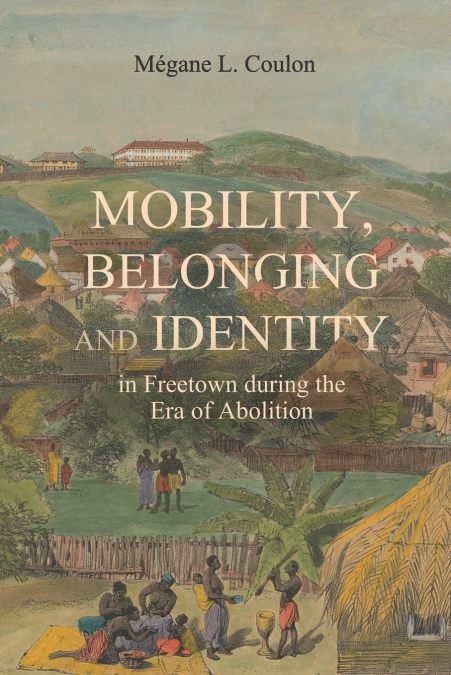
Inicio > Humanidades > Historia > Historia regional y nacional > Historia de África > Mobility, Belonging and Identity in Freetown during the Era of Abolition
Mobility, Belonging and Identity in Freetown during the Era of Abolition

Mobility, Belonging and Identity in Freetown during the Era of Abolition

Mégane L. Coulon

26,47 €
IVA incluido
Disponible
Editorial:
Boydell & Brewer Ltd
Año de edición:
2026
Materia
Historia de África
ISBN:
9781837653072
26,47 €
IVA incluido
Disponible
Añadir a favoritos

Depicts Freetown not as a society defined solely by ’Liberated Africans’, but as a diverse urban world where multiple populations negotiated identity, belonging and opportunity.This book is a social history of Freetown in the British colony of Sierra Leone during the mid‑nineteenth century, a period of rapid settlement and demographic change. It contributes to the history of forced displacement in the age of abolition and empire while engaging with emerging Digital Humanities scholarship that seeks to recover the lives of enslaved people. Across the long nineteenth century, more than 700,000 individuals enslaved in Africa were emancipated through legal processes at sea, on land and by seeking asylum at European consulates in the Atlantic world, the Ottoman Empire and North Africa. Of these, approximately 104,000 ’Liberated Africans’ disembarked in the colony Sierra Leone, making the colony one of the largest centres of these relocations. Drawing on life histories and testimonies, the study reconstructs the complex trajectories of people who moved between Atlantic and African worlds. It highlights the varied experiences of African men, women and children who were forcibly displaced yet forged new lives in the colony.At the same time, it situates their arrival within a broader, social landscape shaped by long‑established communities, Muslim merchants, Temne, Loko, Limba and other groups, whose own histories, networks and aspirations intersected with those of formerly enslaved people. Freetown thus emerges not as a society defined solely by ’Liberated Africans’, but as a diverse and evolving urban world in which multiple populations negotiated identity, belonging and opportunity. The various stories discussed in this book reveal how freedom and coercion coexisted, and how individuals navigated shifting forms of labour, kinship and mobility. By examining how different areas of Freetown were reshaped by settlement, the book traces the emergence of new social structures, commercial networks and patterns of migration.
Artículos relacionados

  • Kulubnarti I
    William Y. Adams / William YAdams
    Sudan Archaeological Research Society. Publication Number 18In 1998 and 1999 volumes II and III of the reports on the University of Kentucky excavations at Kulubnarti were published by the Sudan Archaeological Research Society as numbers 2 and 4 in its monograph series. Kulubnarti III was also available through British Archaeological Reports in its International Series no. 814....
    Disponible

    104,23 €

  • The Creole Elite and the Rise of Angolan Protonationalism
    Jacopo Corrado
    This book is about Angolan literature and culture. It investigates a segment of Angolan history and literature, with which even Portuguese-speaking readers are generally not familiar. Its main purpose is to define the features and the literary production of the so-called ’creole elite’, as well as its contribution to the early manifestations of dissatisfaction towards colonial ...
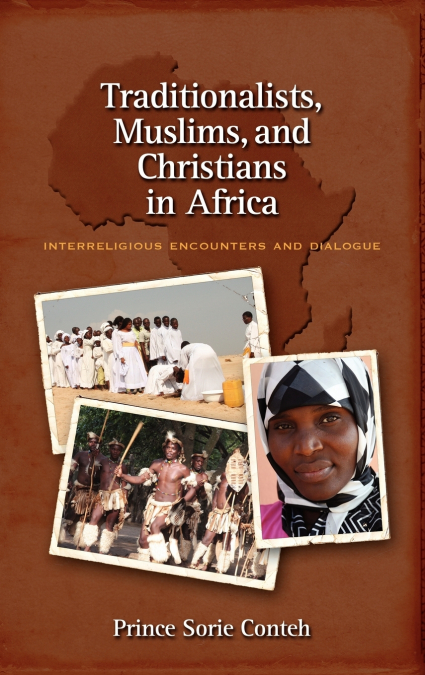
  • Traditionalists, Muslims, and Christians in Africa
    Prince Sorie Conteh
    As is the case for most of sub-Saharan Africa, African Traditional Religion (ATR) is the indigenous religion of Sierra Leone. When the early forebears and later progenitors of Islam and Christianity arrived, they met Sierra Leone indigenes with a remarkable knowledge of God and a structured religious system. Successive Muslim clerics, traders, and missionaries were respectful o...
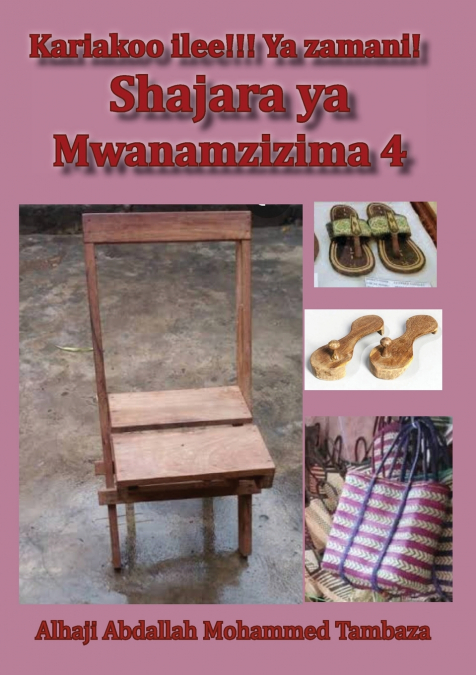
  • Shajara ya Mwana Mzizima 4
    Alhaji Abdallah Mohammed Tambaza
    This is the fourth part in the series of the history of Dar es salaam. This book is about Kariakoo, the first area where Africans were allowed to live and stay. It traces the history of the area before independence and up till the 1970’s.Kitabu hiki ni mfululizo wa vitabu vya kumbukumbu ya sehemu na watu mashuhuri katika jiji la Dar es Salaam. Kitabu hiki ni cha tatu ambacho ki...
    Disponible

    41,51 €

  • Britain, the Royal Air Force and relief flights to Biafra, 1968-1969
    Onianwa Oluchukwu Ignatus
    In this intriguing new book, Onianwa Oluchukwu Ignatus investigates Britain’s decision to engage the Royal Air Force (RAF) in the relief operations during the Nigerian Civil War. The main area badly ravaged by the conflict being the Republic of Biafra was declared 'a frontier of need.' Humanitarian concerns and mounting public pressures, both in Britain and other Western countr...
  • We Rest Here Content
    Robin Smith
    We Rest Here Content is not the history of the Imperial Light Horse Regiment - that was written by the regiment’s Intelligence Officer, Lieutenant George Fleming Gibson and published in 1937 as The Story of the Imperial Light Horse in the South African War 1899-1902. We Rest Here Content approaches the subject of the I.L.H. from a different viewpoint. It looks at all the known ...
    Disponible

    75,50 €