Peter Kropotkin
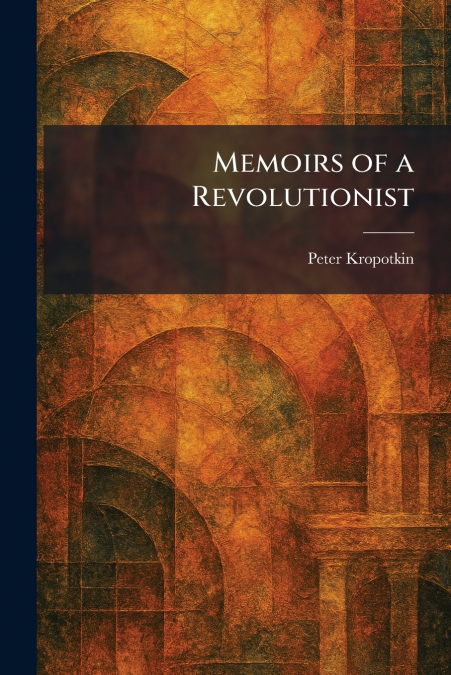
Educated to serve the tsar, Peter Kropotkin became an anarchist. In Memoirs of a Revolutionist, he retraces the decisions that took him from the Russian imperial court to expeditions in Siberia, a fortress prison in St. Petersburg, and exile in Western Europe.Born into an aristocratic family, Kropotkin enters the Corps of Pages, an elite military school that brings him close to the court of Alexander II. A career at the center of imperial power lies open to him. Instead, he chooses military service in Siberia, where geographical expeditions take him far from the capital. He sees how poorly distant officials understand the people they govern and how much those communities accomplish through cooperation of their own. His account of exploration is also an account of learning where to look for practical knowledge.Back in Russia, political conviction draws him into clandestine work in St. Petersburg. Arrest and confinement in the Peter and Paul Fortress bring the machinery of autocracy into his own life. When illness leads to a transfer to a prison hospital, friends help him plan an escape. Kropotkin tells it through the details on which his freedom depended: a signal, a waiting carriage, and the few moments in which he had to act.Exile gives him a new field of action among European socialists and anarchists, but it offers no lasting refuge from imprisonment. His portraits of fellow activists show how political ideas were argued over, put into practice, and sustained by friendships. The geographer’s attention to how people live carries into his account of how they organize and what they are willing to risk for one another.Expanded from a series in The Atlantic Monthly and published in book form in 1899, Memoirs of a Revolutionist is a firsthand account of imperial Russia and the radical movements that challenged its social order. Its central interest lies in watching Kropotkin rethink the institutions he was raised to serve, then accept the consequences of acting on what he came to believe.