Inicio > Humanidades > Arqueología > Los ataúdes egipcios de Pairusejer y de Ruru del Museo Arqueológico Nacional de Madrid
Los ataúdes egipcios de Pairusejer y de Ruru del Museo Arqueológico Nacional de Madrid

Los ataúdes egipcios de Pairusejer y de Ruru del Museo Arqueológico Nacional de Madrid

Los ataúdes egipcios de Pairusejer y de Ruru del Museo Arqueológico Nacional de Madrid

María Cruz Medina Sánchez

217,14 €
IVA incluido
Disponible
Editorial:
British Archaeological Reports (Oxford) Ltd
Año de edición:
2019
Materia
Arqueología
ISBN:
9781407316734
217,14 €
IVA incluido
Disponible
Añadir a favoritos

Los ataúdes de Pairusejer y Ruru procedentes del lote nº 13 de la Cachette de Bab el-Gasus, que forman parte de la colección egipcia del Museo Arqueológico Nacional (Madrid), se analizan en profundidad en este estudio a través de técnicas instrumentales como SEM, imagen VIL, FRX y FTIR. Estas permiten entender cómo fueron elaborados, qué materias primas se emplearon (maderas, morteros, pigmentos o barnices), qué técnicas artísticas aplicaron y el estado de conservación que estas dos cajas funerarias presentan en la actualidad. Asimismo, con ayuda de la documentación y fotografías conservadas se han podido conocer las condiciones del hallazgo en Egipto, su traslado a España y los cambios que experimentaron desde su llegada al museo madrileño hasta hoy. Se identifican las diferentes maderas, las policromías y su conservación, a la vez que se comprende mejor la evolución española de la disciplina de la Restauración tan ligada a la historia del Patrimonio.This study provides an in-depth analysis of the coffins of Pairusejer and Ruru, from lot No. 13 of objects found at Bab el-Gasus, now to be found in the Egyptian collection of the Museo Arqueológico Nacional (Madrid), using a variety of techniques, including SEM, VIL imaging, FRX and FTIR. These allow us to understand how the coffins were made, which materials were used (woods, mortars, pigments or varnishes), what artistic techniques were applied and the coffins' current state of conservation. Moreover, thanks to the documentation and photographs preserved, the conditions of the objects' discovery in Egypt, their transfer to Spain and the changes they have experienced from their arrival at the Madrid museum can also be taken into account. The different woods and types of polychrome decoration are identified, as well as the methods employed in their conservation, at the same time allowing a better understanding of the evolution of restoration practices in Spain, which is intimately related with the history of Heritage as a field.
Artículos relacionados

  • PHAROS
    Branko Kirigin
    This is the first detailed study in English of the Greek settlement of Pharos (Stari Grad) on the Croatian island of Hvar. This book presents life in Stari Grad (a Parian colony of the 4th c BC) and its nearby vicinity in the period occurring more than two millennia ago. The author employs methods used in prehistoric and classical archaeology, as well as data known from written...
    Disponible

    90,79 €

  • Paleolithic Zooarchaeology in Practice
    Understanding Paleolithic animal exploitation requires a multifaceted approach. Inferences may derive from research on paleoenvironments and taphonomy, the development of new methods for interpreting seasonality patterns, and ethnoarchaeological observations. A full understanding of Paleolithic economies also requires a multiregional perspective. This volume brings together a g...
    Disponible

    55,20 €

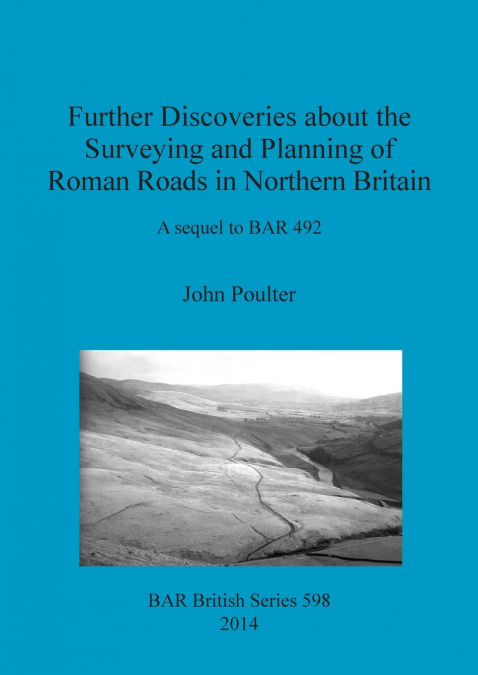
  • Further Discoveries about the Surveying and Planning of Roman Roads in Northern Britain
    John Poulter
    The research reported in this monograph follows on directly from the findings that were reported in BAR 492, in which, among many other discoveries, the author recognised that the courses of both Roman Dere Street and Hadrian’s Wall had been underpinned by frameworks of long-distance alignments. Stimulated by the detection of several more of these alignments across northern Eng...
    Disponible

    65,21 €

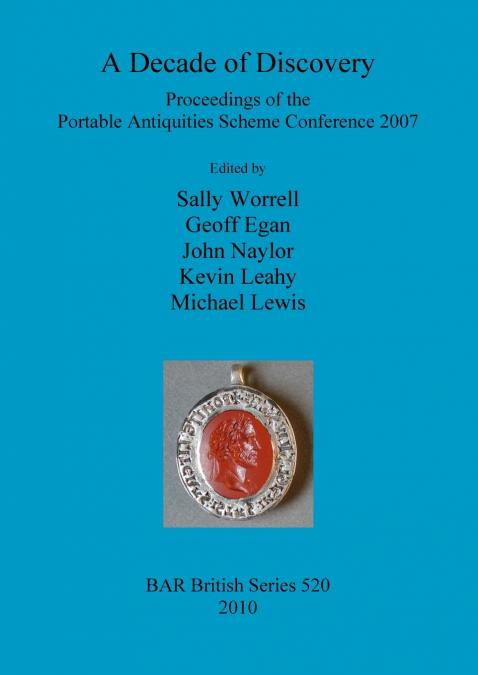
  • A Decade of Discovery
    Edited by Sally Worrell, Geoff Egan, John Naylor, Kevin Leahy and Michael Lewis.In 2007 the Portable Antiquities Scheme (PAS) marked its tenth anniversary by holding a conference at which speakers, both from within the Scheme and outside gave a series of papers that demonstrated the research potential of recording finds of archaeological objects made by members of the public. T...
    Disponible

    117,84 €

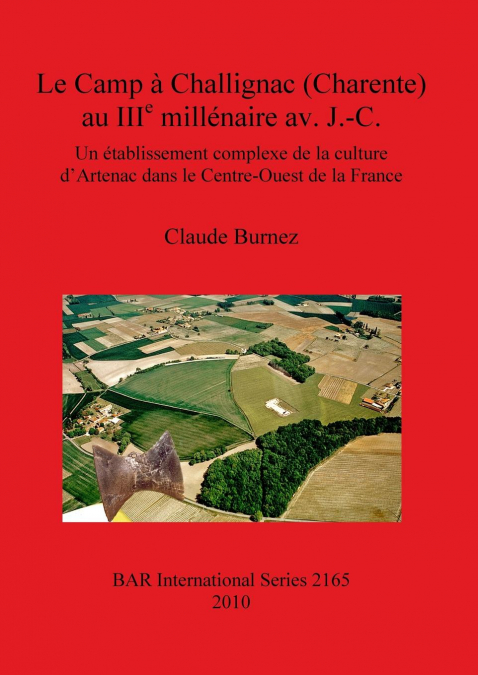
  • Le Camp à Challignac (Charente) au IIIe millénaire av. J.-C.
    Claude Burnez
    Un établissement complexe de la culture d’Artenac dans le Centre-Ouest de la FranceThis fortified enclosure has been known since the middle of the 19th century, but the size and the state of preservation (with the height of the rampart estimated optimistically at 10 metres!) suggested an attribution to the Gallo-Romans or a 'Camp des Anglais'. Extensive woodland covered...
    Disponible

    238,69 €

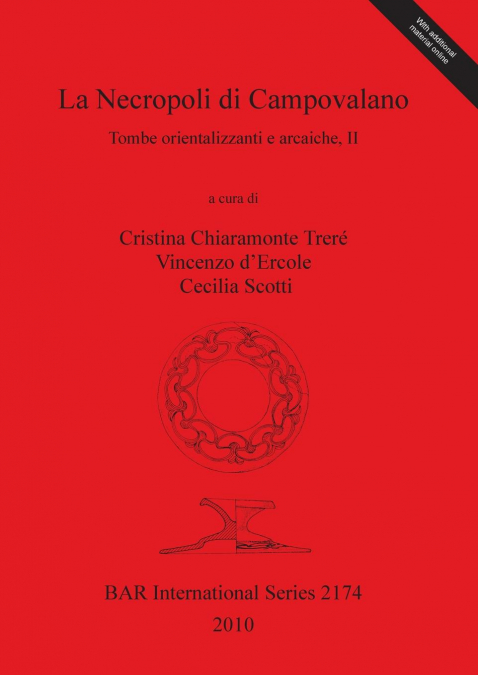
  • La Necropoli di Campovalano
    This volume, investigating the necropolis and sequences of 607 tombs, completes the publication of the site of Campovalano (predominately Late BA to 5th BC) in the region of Teramo, the northernmost province of Abruzzo, Italy (see BAR 1177, 2003). The finds include important oriental style archaic material.Contributions from: Giorgio Baratti, Carla Buoite, Cristina Chiaramonte ...
    Disponible

    220,16 €