Nam Nguyen
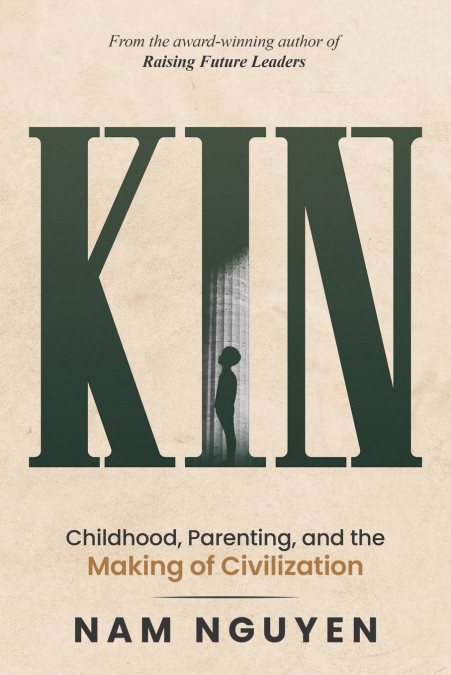
Civilization is not inherited. It is raised.What if one of the most powerful forces in human history has been hiding in plain sight-in the children each generation raises?History is usually told through kings, wars, inventions, empires, and revolutions. But beneath them lies a quieter force: the way societies bring children into the world, protect them, discipline them, educate them, depend on them, and prepare them for the future.In KIN: Childhood, Parenting, and the Making of Civilization, Nam Nguyen follows childhood across the long arc of human history-from our earliest communities and the rise of agriculture to religion, empire, factories, schools, consumer culture, screens, and artificial intelligence.Along the way, KIN explores how:human childhood helped make cooperation, culture, and social learning possible;agriculture transformed children into workers, heirs, and carriers of family continuity;religions, schools, and states shaped children into believers, subjects, and citizens;industrialization changed what societies expected childhood to be;markets and digital technologies created new forces around the child; andartificial intelligence may once again change who-and what-participates in raising the next generation.Blending history, psychology, anthropology, neuroscience, education, and cultural analysis, KIN is not a parenting manual. It is an accessible work of big-idea nonfiction about how childhood reflects the values, fears, ambitions, and contradictions of every age.To understand a civilization, look at what it asks of its children.For readers interested in history, psychology, parenting, anthropology, education, technology, and the future of society, KIN offers a new way to understand where civilization came from-and what we may be raising next. 6