Simon Godfrey
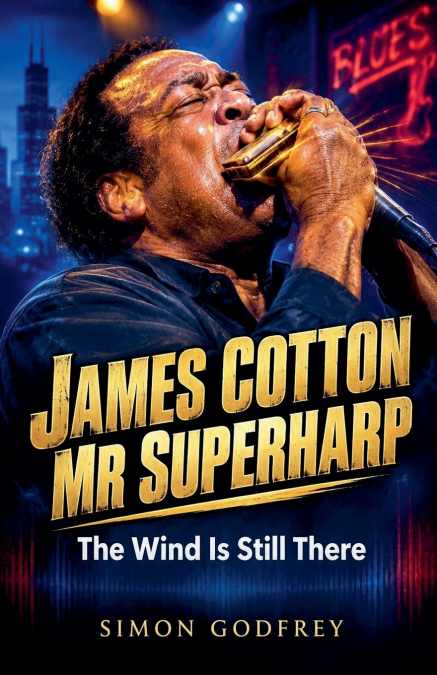
The voice is gone, but the wind is still there.Born on a Mississippi plantation and raised in the raw, demanding world of Delta blues, James Cotton learned the harmonica from Sonny Boy Williamson II before he was old enough to enter a juke joint. As a teenager, he played alongside Howlin’ Wolf. In Chicago, he became Muddy Waters’ harmonica player and bandleader, standing at the heart of the music that transformed modern blues.But Cotton’s story did not end when he stepped out from Waters’ shadow. He built his own hard-driving blues band, shared stages with Janis Joplin, the Grateful Dead and Led Zeppelin, influenced generations of musicians, and earned the nickname 'Superharp' for the sheer power and emotion of his playing.Then, in 1994, throat cancer took his singing voice.For most performers, that would have been the end. For James Cotton, it became another challenge to overcome. He rebuilt his stage act around his harmonica, brought in other singers, and continued touring and recording for more than two decades. In his seventies, he won a Grammy, received a place in the Blues Hall of Fame, and recorded Cotton Mouth Man-an extraordinary late-career album featuring Gregg Allman, Joe Bonamassa, Keb’ Mo’, Ruthie Foster, Warren Haynes and other admirers.James Cotton: Mr Superharp is the story of a remarkable life in music: from a fifteen-cent harmonica and a radio broadcast from Helena, Arkansas, to the greatest stages in the world. It is a story of hardship, survival, friendship, humour and musical resilience-and a tribute to one of the most powerful and influential harmonica players blues has ever produced.The voice may have been gone. But the wind was still there.Know the story. Hear the blues differently.