History & Philosophy of Biology

History & Philosophy of Biology

Felipe Heemann

25,92 €
IVA incluido
Disponible
Editorial:
Brain Codex
Año de edición:
2026
Materia
Biologia, ciencias de la vida
ISBN:
9786597680641
25,92 €
IVA incluido
Disponible
Añadir a favoritos

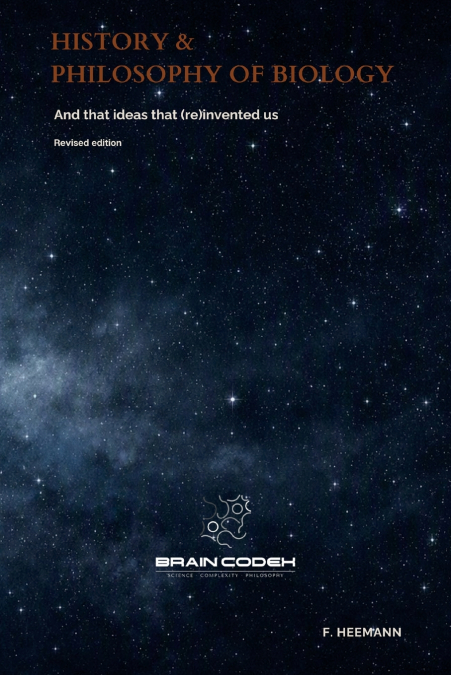
There is a question older than any laboratory, older than any university, older even than the word science: what does it mean to be alive? Not in the technical sense, not the dance of molecules or the logic of genes, but in the full, disorienting weight of the question. To be alive and to know it. To be matter that turned around and asked what matter is.This book is the attempt to follow that question across time.It begins before the pre-socratics, in the silence of the Lower Paleolithic, where the first stone tools are already a philosophy: the declaration that the world can be understood, and that understanding it changes what we are. It ends in the age of epigenetics and neuroscience, where the boundary between the organism and its environment, between nature and biography, has become irreversibly porous. Between these two moments, the book traces the great ruptures: the invention of the body as a mechanism, the discovery of deep time, the double helix as a new kind of fate, the genome as a text that rewrites its own reader.But this book is not a chronicle of discoveries. It is an argument. The argument is this: our biological theories do not merely describe us. They constitute us. Each paradigm, the body as machine, the species as mutable, the cell as the fundamental unit of life, the gene as instruction, has not only explained the living world but reshaped what it means to inhabit it. To understand how we came to think about life is to understand, in the deepest sense, how we came to think about ourselves.The book moves with the rigor of a scientist and the restlessness of a philosopher, refusing the false comfort of linear progress. It recovers the forgotten and the overlooked: the islamic scholars who kept the flame of empirical inquiry alive while Europe slept under dogma; the women whose knowledge was erased before it could be named; the ideas that arrived too early and had to wait centuries for their instruments. It corrects the myths that even science textbooks repeat without embarrassment - and it does so not to deflate wonder, but to deepen it.Written for the reader who suspects that the history of science is also a history of consciousness, History and Philosophy of Biology is an invitation to think about life from the beginning. Not from year zero, but from the first moment a mind looked at the world and decided, against all the evidence of chaos, that it could be understood.We are not the conclusion of this story. We are one of its movements.


Artículos relacionados

  • Viral Replication Complexes
    Viruses are obligate intracellular parasites that need to co-opt a living cell’s machinery for replication. At the heart of the viral replication machinery are the nucleic acid polymerases, which are responsible for efficiently copying the viral genome. This process must often be coordinated with other viral processes, including protein translation and viral packaging. The poly...
  • Advances in Flavivirus Research
    The flaviviruses are composed almost entirely of arthropod-borne viruses, a subset of which are responsible for millions of cases of human disease each year. Among these viruses are dengue virus—a scourge throughout the tropical regions of Asia and the Americas; yellow fever virus—the “original” hemorrhagic fever virus; and the recently emerged Zika virus. While the flaviviruse...
    Disponible

    51,85 €

  • Brain Asymmetry of Structure and/or Function
    Lesley J. Rogers / Lesley JRogers
    This edited book brings together research reports on the asymmetry of brain function in various species, including humans, dogs, birds, lizards and bees. As shown in a wide range of species, and, as we now know, not solely in humans, the left and right sides of the brain process information in different ways and control different responses or patterns of behaviour. Since this d...
    Disponible

    51,71 €

  • Fungal Pigments
    With the impact of globalization in research trends, the search for healthier life styles, the increasing public demand for natural, organic, and ‘clean labelled’ products, as well as the growing global market for natural colorants in economically fast-growing countries all over the world, filamentous fungi started to be investigated as readily available sources of chemically d...
    Disponible

    43,80 €

  • The Epithelialto- Mesenchymal Transition ( EMT ) in Cancer
    Joëlle Roche
    The epithelial-to-mesenchymal transition (EMT) is a highly dynamic process with multiple transitional states, by which epithelial cells can convert into a mesenchymal phenotype. This process involves loss of cellular adhesion and cellular polarity, and an improvement in migratory and invasive properties. It occurs during normal embryonic development, tissue regeneration, organ ...
    Disponible

    67,86 €

  • The Biology and Treatment of Myeloid Leukaemias
    There has been an observed decrease in the global mortality from cancer, mostly atributable to improved, particularly early, detection and prevention. For many carcinomas and leukaemias in adults, once the disease has reached a certain stage there are no therapies that are able to erradicate the cancer cells and cure patients. There has been progress in the treatment of acute m...
    Disponible

    51,85 €

Otros libros del autor

  • Biologia Psicotrópica
    Felipe Heemann
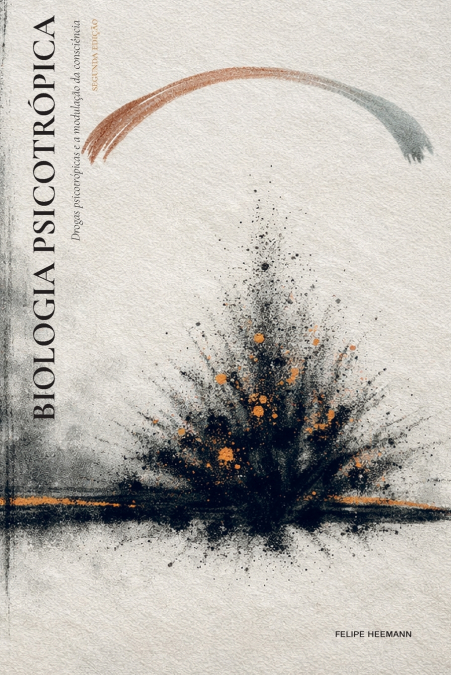
    Como uma única molécula, invisível a olho nu, pode dissolver a fronteira entre o eu e o mundo? Como a matéria se torna mente, e como a mente pode ser reconfigurada pela matéria? Estas perguntas atravessam rituais ancestrais e laboratórios de ponta, e estão no centro de um dos campos mais fascinantes da biologia contemporânea: a farmacologia psicotrópica.Biologia Psicotrópica nã...
    Disponible

    47,50 €

  • The Fractal Brain
    Felipe Heemann
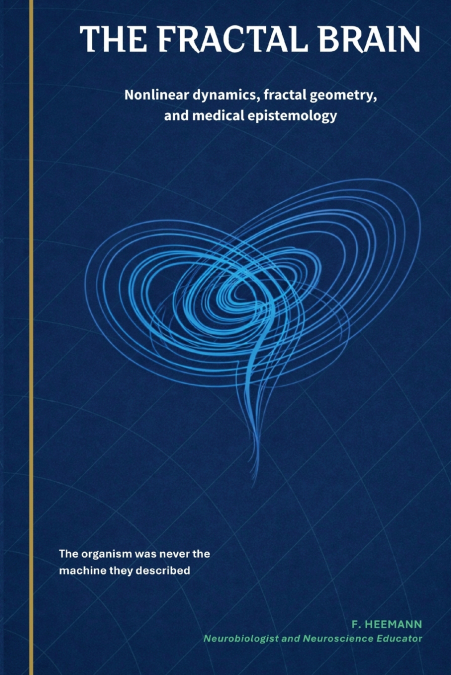
    Clinical medicine inherited a mathematics built for planets and clocks - linear, reversible, equilibrium-seeking - and applied it to organisms that are none of these things. The Fractal Brain is a systematic demolition of that inheritance.Drawing on dissipative structure theory, fractal geometry, and nonlinear dynamics, the book demonstrates that the living organism is not a ne...
    Disponible

    51,50 €