MD Ramon C. Henson
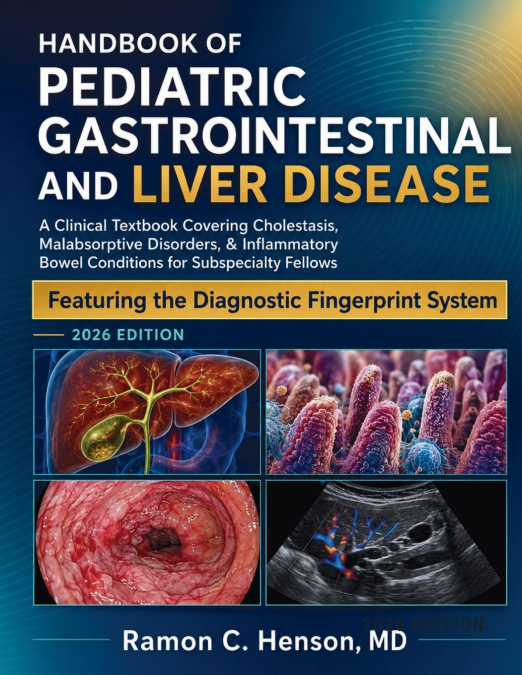
Built for the pediatric gastroenterology and hepatology fellow moving from textbook to bedside, this handbook connects the mechanism behind pediatric GI and liver disease to the decisions made in clinic, endoscopy suite, and on-call. It moves from growth faltering and the esophagogastric disorders through malabsorptive, motility, and inflammatory bowel disease, into the full arc of hepatobiliary disease, and closes with the pancreatic and surgical presentations that cannot wait for a subspecialist. The Diagnostic Fingerprint System threads every chapter, pairing presentation with endoscopic, histologic, and imaging signatures to produce a single diagnostic anchor a fellow can act on. Inside, You Will Learn How To • Separate GERD from eosinophilic esophagitis - biopsy-driven criteria that keep refractory dysphagia from being misread as reflux.• Read the celiac serology-to-biopsy pathway - villous atrophy interpreted against tTG-IgA without a missed diagnosis on a gluten-light diet.• Distinguish Crohn disease from ulcerative colitis on first endoscopy - distribution and histology mapped to a management pathway, including the 72-hour acute severe colitis decision point.• Recognize biliary atresia before the window closes - jaundice past two weeks worked up against the Kasai timeline that determines native liver survival.• Build the Wilson disease score - ceruloplasmin, urinary copper, and ATP7B testing integrated into one diagnostic anchor.• Work up acute liver failure in parallel, not in sequence - metabolic, autoimmune, infectious, and toxicologic causes evaluated simultaneously against the transplant clock.• Call bilious vomiting what it is - the contrast study and Ladd procedure timeline that separates a viable gut from a lost one. Put the Diagnostic Fingerprint System to work on your next consult.