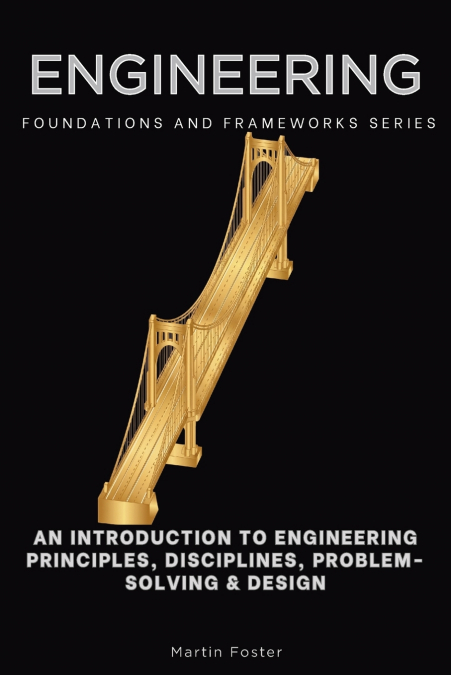
Engineering

Engineering

Martin Foster

19,13 €
IVA incluido
Disponible
Editorial:
PublishDrive
Año de edición:
2026
Materia
Tecnología: cuestiones generales
ISBN:
9798900421278
19,13 €
IVA incluido
Disponible
Añadir a favoritos

Engineering explained from the ground up, with no advanced math required. This introduction to engineering shows you how bridges stay standing, why software fails, and how a vague problem becomes something that works the first time. The book moves from the basic question of what engineers actually do, through the design process, systems thinking, project money and risk, professional ethics, and where the field is going next. Every concept is tied to a real project or a real failure, so the ideas stay with you. The aluminum can that dropped from 85 grams to 13. The Brooklyn Bridge that Emily Warren Roebling ran for eleven years. The trade-offs are honest too, since you can usually make something cheaper, faster, or better, but not all three. The chapters cover: - What separates engineering from science, and how the field went from craft knowledge traded between apprentices to a licensed profession with accredited degrees and codes of conduct - The engineering method: framing a problem, gathering constraints, prototyping early, and the difference between verification and validation - Statics, dynamics, thermodynamics, materials, and dimensional analysis, including the metric and imperial mix-up that destroyed a 125 million dollar Mars orbiter in 1999 - Mechanical, civil and structural, electrical, chemical, and software engineering, and how all five meet inside one modern car - Concept generation, trade-off analysis, computer-aided design, failure modes, and design for manufacturability - Systems thinking, feedback loops, redundancy, and single points of failure, with the James Webb Space Telescope as the extreme case of a machine that had to unfold correctly a million and a half kilometers from any possible repair - Cost estimation, risk matrices, scheduling, resource allocation, and supply chains, because a brilliant design that runs out of budget never gets built - Safety standards and licensing, told through the Challenger O-rings and the exploding boilers that produced the first pressure vessel code - Sustainable design, robotics, machine learning, bioengineering, and nanotechnology Written for: - Students deciding whether to study engineering - Technicians, managers, and writers who work with engineers and want to follow the conversation - Career changers looking at the field from outside - Curious readers who want to understand the built world around them Each chapter closes with review questions, and worked example answers sit in the back. A historical timeline traces the profession across roughly 4,600 years, starting with Imhotep and ending with modern accreditation. A glossary defines the working vocabulary in plain language, covering terms like dead load, single point of failure, and mean time between failures. A recommended reading list points you toward good next books on any topic that catches you. You finish with three things: - a map of how the disciplines fit together - the vocabulary to talk with engineers and understand the technology running your life, - and a problem-solving method that works just as well for planning a business or fixing a faucet.

Artículos relacionados

  • Science and the Big Issues of Our Time
    Martin Gellender
    Within the last few generations, our world has been shaped by technological change enabled by scientific advances. This is particularly evident to the 'baby boomer' generation, who have lived through and witnessed huge changes in society over the course of their lifetimes. Although many have little education in science, or have forgotten what they learned in high school, they u...
    Disponible

    28,04 €

  • Statics+++
    James W Dally / Robert J Bonenberger
    This textbook has been prepared to support a course offering for Statics at the University of Nevada at Reno.  Statics provides the first exposure of engineering students to the study of mechanics.  While Statics is a relatively simple subject, many students find it difficult, and they often perform far below our expectations.  In an effort to improve the curriculum, several me...
    Disponible

    124,50 €

  • Technical Writing, Presentational Skills, and Online Communication
    Raymond Greenlaw
    This book addresses four main topics: professional ethics, technical writing, presentation skills, and online writing. These topics are woven throughout the book and some of them are the main subjects of one or more chapters. The overarching theme of this book is to provide well-tested, best-practice techniques and strategies for main topic areas while focusing on information t...
  • Project Management Techniques and Innovations in Information Technology
    John Wang
    Managing cost, time, and quality of a project can be a challenging task for any project manager, but especially in times of an ever-changing and burgeoning field of IT. Project Management Techniques and Innovations in Information Technology offers a vital compendium of the latest research, case studies, best practices, and methodologies within the field of IT project management...
  • Phenomenology, Organizational Politics, and IT Design
    Information systems are researched, published on, and utilized as an extremely broad and vital sector of current technology development, usually studied from the scientific or technological viewpoints therein. Phenomenology, Organizational Politics, and IT Design: The Social Study of Information Systems offers a new look at the latest research and critical issues within the fie...
  • Geotechnical Applications for Earthquake Engineering
    Disaster preparedness and response management is a burgeoning field of technological research, and staying abreast of the latest developments within the field is a difficult task. Geotechnical Applications for Earthquake Engineering: Research Advancements has collected chapters from experts from around the world in a variety of applications, frameworks, and methodologies, and p...

Otros libros del autor

  • Vehicle Dynamics
    Martin Foster
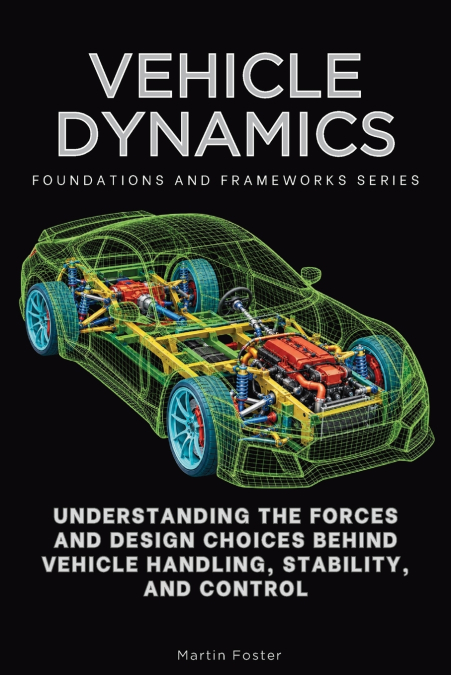
    Vehicle dynamics explains why a car grips, leans, slides, or rolls over, and this book shows you how to predict each behavior with algebra and basic physics. You get the reasoning engineers use to set up a chassis, in plain language, with worked numbers you can check yourself. Ten chapters build on each other in the order an engineer learns the subject, starting with axis syste...
    Disponible

    19,21 €

  • Aerodynamics
    Martin Foster
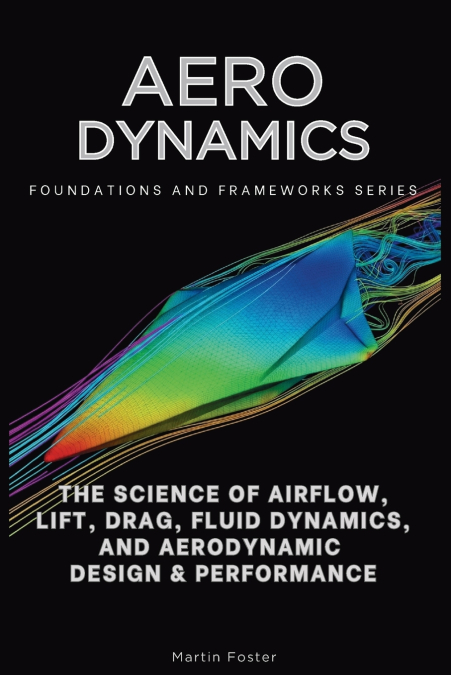
    Aerodynamics explained in plain language, starting with the physics of air and ending with the wings, rotors, race cars, and bridges that depend on it. Learn why things fly, stall, stick to the track, or shake apart in the wind. Ten chapters build the subject in order. Each one starts from the properties of air, adds the governing equations, and then applies them to real machin...
    Disponible

    19,13 €

  • Electronics
    Martin Foster
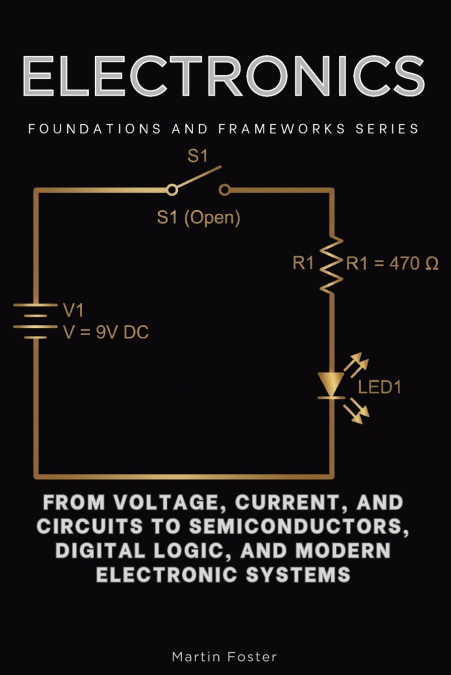
    Learn electronics the way the ideas actually build on each other, with clear physical explanations, high school algebra, and worked examples using real component values. Every chapter shows what happens inside a part, then teaches you to predict how it behaves. Ten chapters run in dependency order, so each one rests on the methods from the chapters before it. You learn resistan...
    Disponible

    18,98 €

  • Supercar Engineering
    Martin Foster
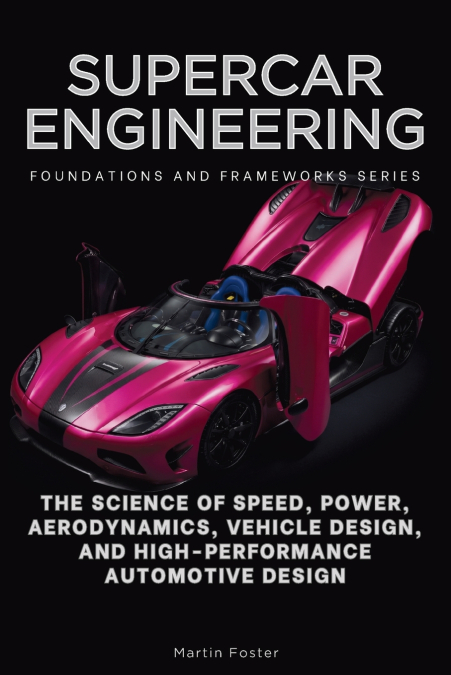
    Supercar engineering explained with basic algebra and real numbers from McLaren, Ferrari, Bugatti, Porsche, and Rimac. Learn how the fastest road cars accelerate, corner, brake, breathe, cool themselves, and stay stable at speeds most cars never reach. Ten chapters build on each other. The first covers force, torque, friction, and weight transfer, and the last shows how electro...
    Disponible

    19,21 €

  • Robotics, Foundations and Frameworks Series
    Martin Foster
    Robotics comes down to one loop: sense the world, work out what the readings mean, choose an action, and carry it out. This book shows you how engineers build each part of that loop, including the math of a moving arm and the AI models that now steer humanoid robots. The chapters follow the order in which problems appear when you actually try to build a robot. Each one starts w...
    Disponible

    18,97 €

  • Formula One
    Martin Foster
    Formula One makes sense once someone shows you what you are looking at. This book explains the cars, the teams, the race strategy, and the money behind modern Grand Prix racing in plain language, with no engineering background needed. The 2026-2030 regulations reset almost everything at once. A new engine formula splits power roughly evenly between combustion and electric, the ...
    Disponible

    19,07 €