GRANT WHITLOCK
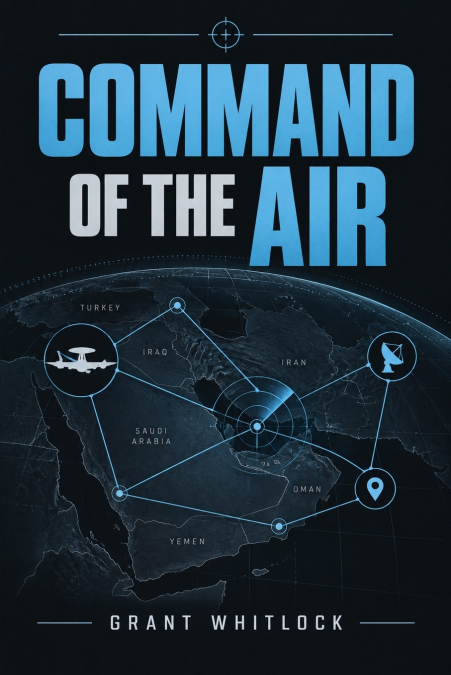
An air commander cannot control what he cannot see. That single principle sits at the heart of Command of the Air, a strategic and operational history of how the Gulf War coalition planned, coordinated, and executed one of the most complex air campaigns in military history - and what its command-and-control architecture reveals about modern warfare more broadly.This is a serious military-strategy book, not a narrative retelling of the war. It examines the layered coalition command structure under Generals Schwarzkopf and Horner, the enormously detailed daily air tasking order that governed thousands of sorties, the airborne command-and-control platforms - AWACS, JSTARS, and Rivet Joint - that turned a fixed plan into real-time coordination, and the genuine limits that system revealed, from the Scud hunt to the sobering lessons of friendly fire. Later chapters trace how these lessons shaped doctrine through Kosovo, Afghanistan, and Iraq, and how they fed into the rise of network-centric warfare.Written for readers who want to understand the 'invisible architecture' behind a historic military campaign, this book argues that command and control deserves recognition alongside stealth aircraft and precision munitions as one of Desert Storm’s most consequential achievements - a lesson with continued relevance for how modern militaries plan and fight.What’s inside:- The coalition’s layered, multinational command structure and the challenge of national caveats- A detailed examination of the air tasking order planning process- How AWACS, JSTARS, and Rivet Joint worked together as a networked sensor system- Case studies including the Battle of Khafji and the Scud hunt- A clear-eyed analysis of fratricide risk and the limits of real-time command and control- Comparative chapters connecting Desert Storm to Kosovo, Afghanistan, and Iraq- A glossary, timeline, and order-of-battle appendix for quick reference