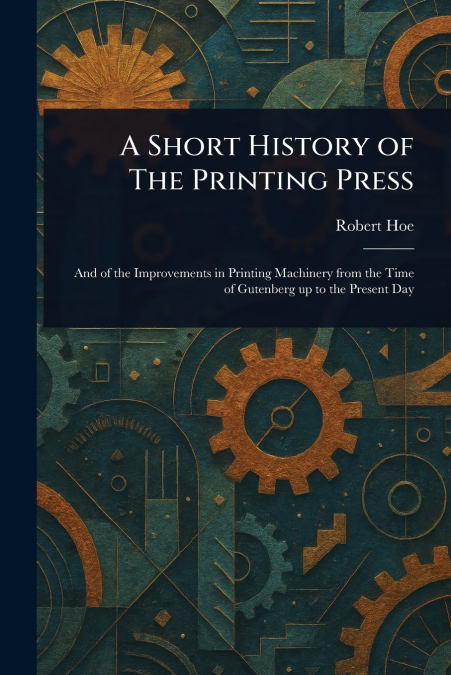
Robert Hoe
An engrossing survey of the machines and minds that turned books into mass culture. It changed everything for readers. Robert Hoe’s concise account traces the history of printing from Gutenberg-era technology through the successive improvements that defined nineteenth century publishing, laying out the printing press evolution and the printing machinery development that made mass book production possible. Clear-eyed about mechanics yet attentive to social and commercial context, Hoe balances technical explanation with readable narrative, situating the invention of printing press among the industrial revolution inventions that reshaped labour, trade and leisure. The book reads as both a primer in book production history and a firm entry among history of technology books, mapping how presses, typefounding and paper supply combined to change who could publish and who could read. Practical without jargon, it will reward curious readers and those seeking precise background for research into the history of publishing.Historically important, the volume is as useful on a scholar’s shelf as it is satisfying for the casual reader; a true reference for historians and, for classic-literature collectors, a library collection essential. Its chronological sweep helps explain how innovations spread through workshops and markets, giving a readable account of nineteenth century publishing and the social shifts that accompanied industrial revolution inventions. Students of the history of publishing, bibliographers and museum professionals will find the book’s measured chronology valuable to projects in conservation and curation; casual readers will appreciate its plain-speaking charm. Republished by Alpha Editions in a careful modern edition, this volume preserves the spirit of the original while making it effortless to enjoy today - a heritage title prepared for readers and collectors alike. Whether you arrive by interest in Gutenberg-era technology, the wider sweep of industrial revolution inventions, or the technical story of printing machinery development, Hoe’s account remains a lucid, refreshingly direct companion to the past of the printed page.