Johnson
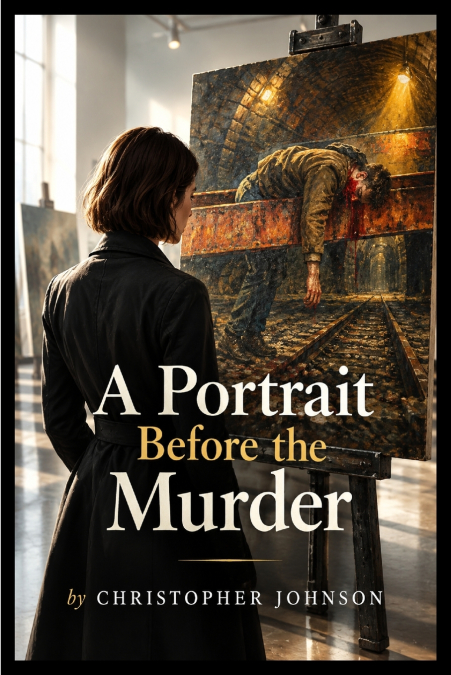
Senior Inquisitor Claire Ross enters Room 5 of a sealed gallery and finds seven untitled paintings arranged beneath isolated amber lights. They are not ordinary works of art. Each canvas reconstructs a killing with unnerving forensic precision: a body placed just so, a particular weapon or object, a location rendered down to its rust, stone, and shadow. The first painting depicts Cole Bradley, an ironworker murdered beneath the city, with an antique pocket watch held in his dead hand. The details are too exact to be artistic speculation. The paintings seem to know the crimes before the evidence has been fully understood-and perhaps before the deaths themselves.Claire’s investigation leads from the gallery’s wealthy patrons and carefully curated cold cases into the hidden rooms beneath the city. As she follows clues encoded in pigment, composition, and the placement of each figure, she uncovers a secretive organization known as the Black Canvas Syndicate. Its members treat murder as a commissioned work, using art to plan, document, and conceal executions while influential clients buy the illusion of culture and civic virtue. The canvases are contracts as much as images, and the people who understand their language have learned to turn beauty into a precise instrument of violence.The case forces Claire to work through layers of institutional obstruction, staged evidence, and dangerous encounters in abandoned transit passages and municipal sub-basements. Gabriel Thorne and other figures connected to the investigation complicate the line between witness, suspect, and accomplice. Every new painting offers another piece of the design, but it also raises a more disturbing question: if a murder can be composed in advance, who is the artist-the hand that paints it, the patron who commissions it, or the system that allows it to happen?A Portrait Before the Murder is a tense, atmospheric crime thriller about art, power, and the manufacture of violence. Its stark galleries, subterranean workshops, and forensic imagery create a world where a brushstroke can serve as evidence and a masterpiece can be a death warrant. As Claire closes in on the people behind the paintings, she must expose the machinery that turns human lives into collectible objects-and reckon with the unsettling possibility that the hunter, too, has been recorded in the Syndicate’s catalogue.