A Knowledge Theory of Capital

A Knowledge Theory of Capital

Jeffrey Gardiner

26,11 €
IVA incluido
Disponible
Editorial:
Jeffrey Gardiner
Año de edición:
2026
Materia
Microeconomía
ISBN:
9798181313934
26,11 €
IVA incluido
Disponible
Añadir a favoritos

What if the most important capital in the modern economy is barely visible?Today’s most valuable firms often depend less on factories than on software, data, AI models, judgement, routines, user feedback, platform access, standards, open-source systems, and trust. These assets create wealth, but they are hard to own, measure, protect, or value on a balance sheet. They can be copied without being consumed, improved through use, enclosed by platforms, degraded by cyber failure, or lost when people leave.A Knowledge Theory of Capital: The Value of Natural and Artificial Intelligence, Volume 1 develops a theory of knowledge-bearing capitalism. It begins with Adam Smith’s account of labour, stock, specialization, markets, and national wealth, then asks what changes when productive knowledge becomes central. Knowledge becomes capital-like only when it yields productive services under conditions of access, capability, governance, demand, maintenance, and recombination.The theory introduces knowledge-bearing stock: productive knowledge embodied in people, encoded in artefacts, institutionalized in organizations, sustained in commons, or maintained as public infrastructure. It explains how knowledge is generated, converted into governable form, deployed, improved through feedback, enclosed or shared, and returned as input to future generation.The central warning is the Smithian inversion: private accumulation of knowledge-bearing capital can strengthen present production while narrowing the fields and learning loops that make future innovation possible. This reframes AI feedback capture, API closure, patent thickets, cybersecurity loss, maintainer shock, and accounting invisibility as one capital problem.At roughly 450 pages, this volume offers economists, technologists, cybersecurity leaders, investors, policymakers, and curious readers a framework for understanding where modern wealth resides, how it is governed, and how it can be lost before anyone records it.
Artículos relacionados

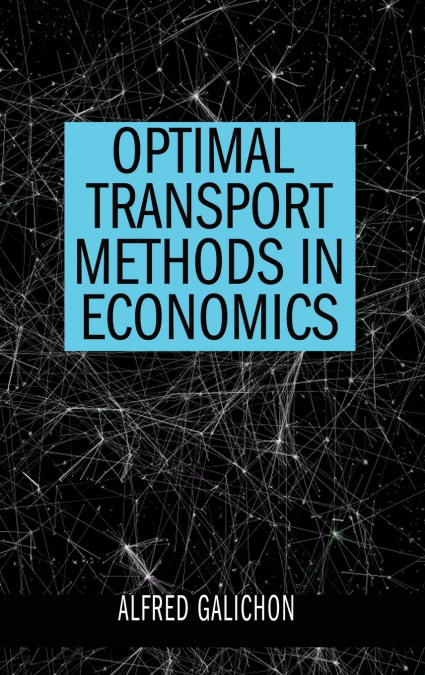
  • Optimal Transport Methods in Economics
    Alfred Galichon
    Optimal Transport Methods in Economics is the first textbook on the subject written especially for students and researchers in economics. Optimal transport theory is used widely to solve problems in mathematics and some areas of the sciences, but it can also be used to understand a range of problems in applied economics, such as the matching between job seekers and jobs, the de...
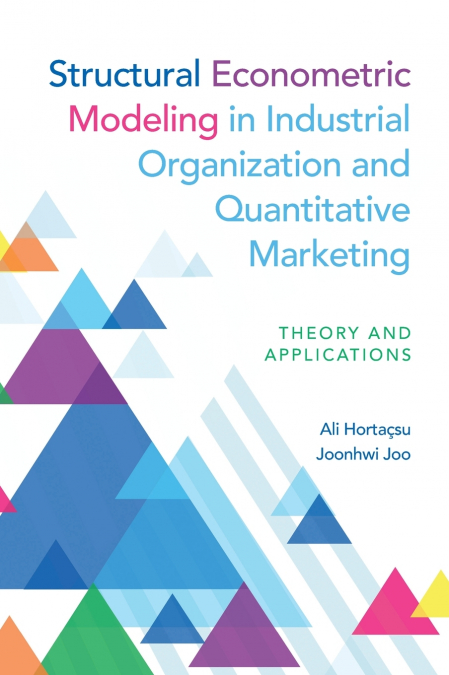
  • Structural Econometric Modeling in Industrial Organization and Quantitative Marketing
    Ali Hortaçsu / Joonhwi Joo
    A concise and rigorous introduction to widely used approaches in structural econometric modeling Structural econometric modeling specifies the structure of an economic model and estimates the model’s parameters from real-world data. Structural econometric modeling enables better economic theory-based predictions and policy counterfactuals. This book offers a primer on recent de...
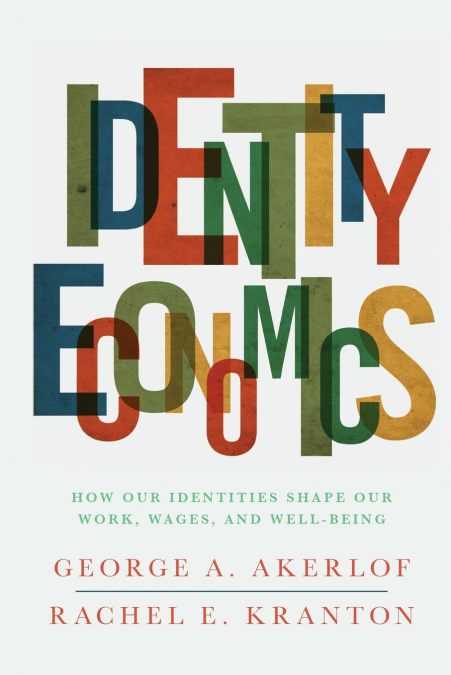
  • Identity Economics
    George A. Akerlof / Rachel E. Kranton
    How identity influences the economic choices we makeIdentity Economics provides an important and compelling new way to understand human behavior, revealing how our identities-and not just economic incentives-influence our decisions. In 1995, economist Rachel Kranton wrote future Nobel Prize-winner George Akerlof a letter insisting that his most recent paper was wrong. Identity,...
    Disponible

    27,49 €

  • Economic Foundations of Symmetric Programming
    Quirino Paris
    ...
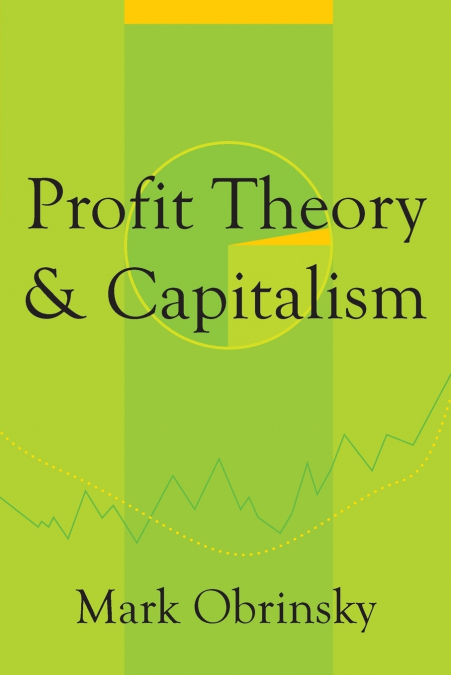
  • Profit Theory and Capitalism
    Mark Obrinsky
    The pursuit of profit by business motivates the capitalist economic system. Understanding profits, therefore, especially the source of profits, is essential to an understanding of capitalism. Mark Obrinsky claims that there has never been an adequate profit theory in mainstream economics. To find the source of profits, he argues, one needs to look beyond ownership of the produc...
    Disponible

    31,88 €

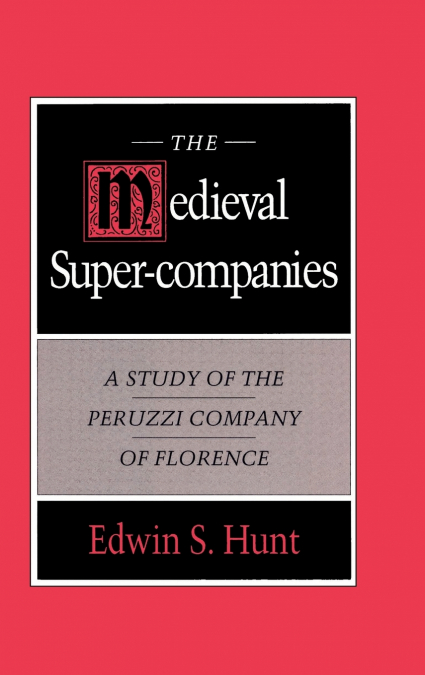
  • The Medieval Super-Companies
    Edwin S. Hunt / Edwin SHunt
    ...