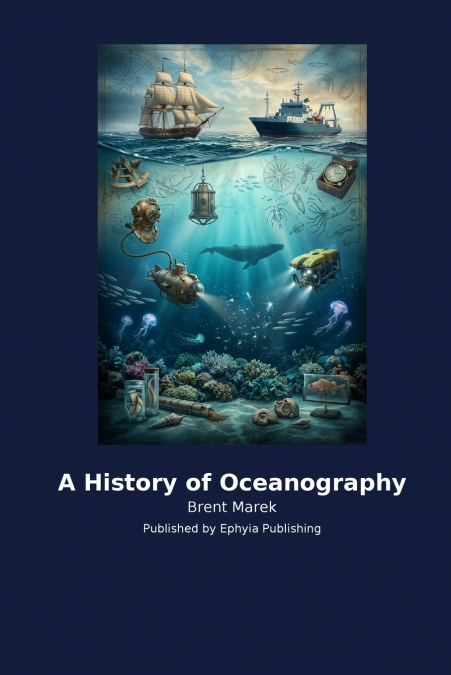
A History of Oceanography

A History of Oceanography

Brent Marek

16,15 €
IVA incluido
Disponible
Editorial:
Ephyia Publishing
Año de edición:
2026
Materia
Ciencia: cuestiones generales
ISBN:
9798256041144
16,15 €
IVA incluido
Disponible
Añadir a favoritos

Dive into the sweeping saga of how humanity came to know the vast, mysterious ocean that covers our planet. From the daring star‑guided voyages of Polynesian navigators and the pragmatic wind‑charts of Phoenician traders to the bold circumnavigations of Magellan and the painstaking depth soundings of the HMS Challenger, this book traces every leap of curiosity and technology that turned myth into measurement. Readers will walk alongside ancient mariners who read swells and seabirds, witness the birth of modern science in the Challenger’s fifty‑volume report, and feel the excitement of discovering hydrothermal vents teeming with life in the sunless deep. The narrative unfolds the scientific revolutions that reshaped our understanding of Earth itself. You will learn how early physicists unraveled the tides, how the invention of the marine chronometer solved the longitude problem, and how the painstaking work of mapping ocean currents revealed the great gyres that drive global climate. The book then carries you through the seismic breakthroughs of plate tectonics, showing how sonar, magnetic striping, and deep‑sea drilling turned the ocean floor into a dynamic, moving landscape that explains earthquakes, volcanoes, and the very shape of continents. Beyond physics and geology, immerse yourself in the ocean’s living world. Explore the rise of marine biology from Aristotle’s observations to the discovery of chemosynthetic ecosystems at black smokers, and follow the intricate food webs that link microscopic phytoplankton to great whales. You will experience the triumphs and trials of fisheries science, the revelation of coral bleaching as a climate warning, and the startling insight that ocean acidification is silently dissolving the shells of plankton, oysters, and corals-forcing a reevaluation of what life in the sea can endure. Finally, the book brings you to the cutting edge of twenty‑first‑century oceanography, where satellites, autonomous robots, and genomic sequencers create a continuous, real‑time view of the sea’s interior. You will see how data from Argo floats, cabled observatories, and environmental DNA are transforming our ability to predict El Niño, map the twilight zone, and monitor the health of polar ice shelves. By the end, readers will not only grasp the history of a science but also appreciate the ocean’s central role in Earth’s climate, biodiversity, and future-equipping them to understand the challenges and wonders that lie ahead in our interconnected blue planet.
Artículos relacionados

  • Cases on Research-Based Teaching Methods in Science Education
    Eugene de Silva
    While the great scientists of the past recognized a need for a multidisciplinary approach, today’s schools often treat math and science as subjects separate from the rest. This not only creates a disinterest among students, but also a potential learning gap once students reach college and then graduate into the workforce. Cases on Research-Based Teaching Methods in Science Educ...
  • Enhancing Qualitative and Mixed Methods Research with Technology
    Shalin Hai-Jew
    In light of the expensive nature of quantitative research, such as experiments, researchers must seek other methods of understanding the world around them. As such, new qualitative methods are gaining ground in the modern research community. Enhancing Qualitative and Mixed Methods Research with Technology explores the integration of new digital tools into the research process. ...
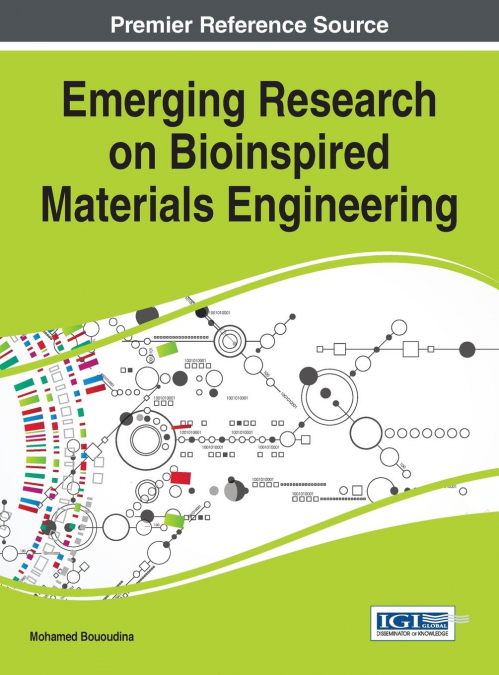
  • Emerging Research on Bioinspired Materials Engineering
    Mohamed Bououdina
    Bioinspired materials can be defined as the organic or inorganic materials that mimic naturally occurring substances. With applications in a number of fields such as biomedical, chemical, mechanical, and civil engineering, research on the development of biologically-inspired materials is essential to further advancement. Emerging Research on Bioinspired Materials Engineering pr...
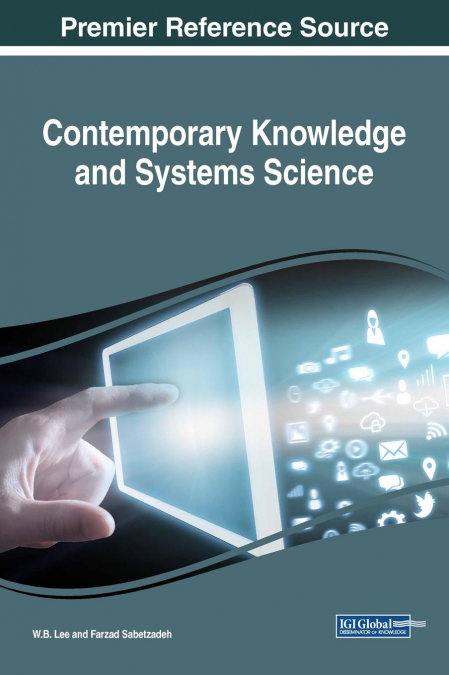
  • Contemporary Knowledge and Systems Science
    As branches of research and knowledge continue to expand, platforms for gathering and understanding new information become important aspects of organizational improvement. Contemporary Knowledge and Systems Science provides emerging research on the methods and applications of knowledge systems in social science, economics, and technological developments. While highlighting topi...
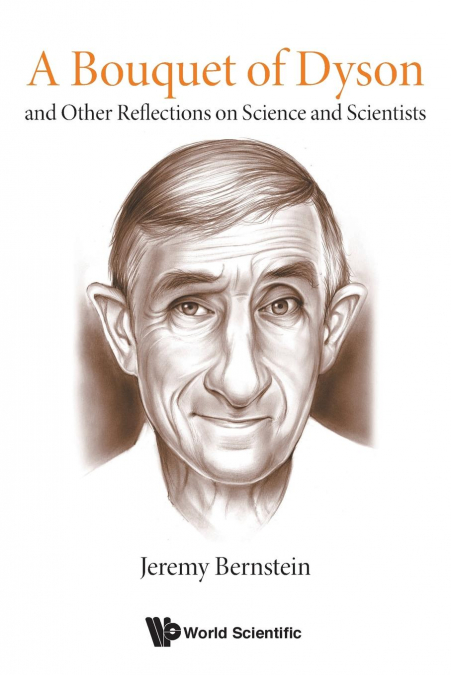
  • BOUQUET OF DYSON, A
    BERNSTEIN JEREMY / Jeremy Bernstein
    University of Texas at Austin My friendship with Freeman Dyson goes back over a half century. My first contact with him goes back to the late 1950s, when I was at the Institute for Advanced Study, and then evolved when I was a consultant at General Atomics in La Jolla, California. Freeman was then trying to design a space ship — the Orion — which would be propelled by atomic bo...
    Disponible

    33,35 €

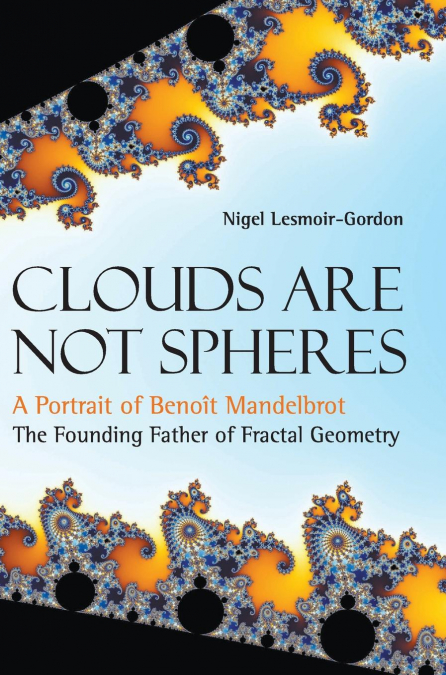
  • CLOUDS ARE NOT SPHERES
    LESMOIR-GORDON NIGEL / NIGEL LESMOIR-GORDON
     The time is right, following Benoît Mandelbrot's death in 2010, to publish this landmark book about the life and work of this maverick math genius.This compact book celebrates the life and achievements of Benoît Mandelbrot with the ideas of fractals presented in a way that can be understood by the interested lay-person. Mathematics is largely avoided. Instead, Mandelbrot&#...